Viking's Grand European Tour: A Day-by-Day Guide From Budapest to Amsterdam
Published September 24, 2026
Updated September 24, 2026
Travel Experts
at The Cruise Web
Viking River Cruises' Grand European Tour is a 15-day river cruise connecting Budapest, Vienna and Amsterdam along the Danube, Main and Rhine, crossing four countries and stopping at one UNESCO World Heritage site after another. It's the kind of trip where you fall asleep to the gentle rush of water against the hull and wake up in a different country covered with hillside vineyards and half-timbered villages. The itinerary balances scenic sailing days with ports of call, so guests spend as much time watching castle-topped hills go by from a deck chair as they do wandering the streets of Vienna and Cologne.
Here's a day-by-day look at what the journey includes, from the Wachau Valley's terraced vineyards to Amsterdam's canals.
Note: This itinerary also sails in the reverse direction, from Amsterdam to Budapest, on select departures. The ports, inclusions and scenic sailing days are the same in either direction.
Grand European Tour at a Glance
- Length: 15 days
- Guided tours included: 12
- Countries visited: 4 (Hungary, Austria, Germany, Netherlands)
- Rivers sailed: Danube, Main & Rhine
- Ports of call: 13, from Budapest to Amsterdam
- UNESCO World Heritage Sites visited: 7 (Wachau Valley, Regensburg's Old Town, Bamberg's Old Town,Würzburg Residenz, the Middle Rhine, Cologne Cathedral, Kinderdijk)
- Scenic sailing days: 5 (Wachau Valley, Main-Danube Canal, Main River through the Spessart, Middle Rhine, Waal & Merwede)
- Airfare: Not included*; Viking Air available separately
- Transfers: Included with Viking Air & pre- or post-cruise extensions
*Our Cruise Experts keep track of any exclusive amenities and limited-time deals with Viking River Cruises, such as free or reduced airfare. Subscribe to our Cruise Deals emails or call us, and we can notify you as soon as they are released.
Day-by-Day Itinerary
15 days on the water settles into its own rhythm. You'll wake up every morning to a new view, step off the ship for a guided tour built into your fare, then spend the rest of the day exploring at your own pace. Most stops also offer optional excursions for guests who want to do more than the included walking tours. Viking groups these onshore experiences into three types:
- Local Life: Experiences that get up close to how local people actually live
- Working World: Visits to vineyards, farms & artisan workshops
- Privileged Access: Private outings, often before- or after-hours access to museums, palaces & performances rarely open to the general public
Each port typically offers several optional excursions beyond the ones highlighted below, and availability shifts by departure. Our Cruise Experts can walk through the full list with you one-on-one and help you build the itinerary that fits what you actually want to see.
Many guests fly in a few days early, whether to settle into Budapest on their own, with the assistance of our Cruise Experts, or through Viking's pre-cruise extensions. Here's what each day of the journey looks like, port by port.
Days 1 to 2: Budapest, Hungary
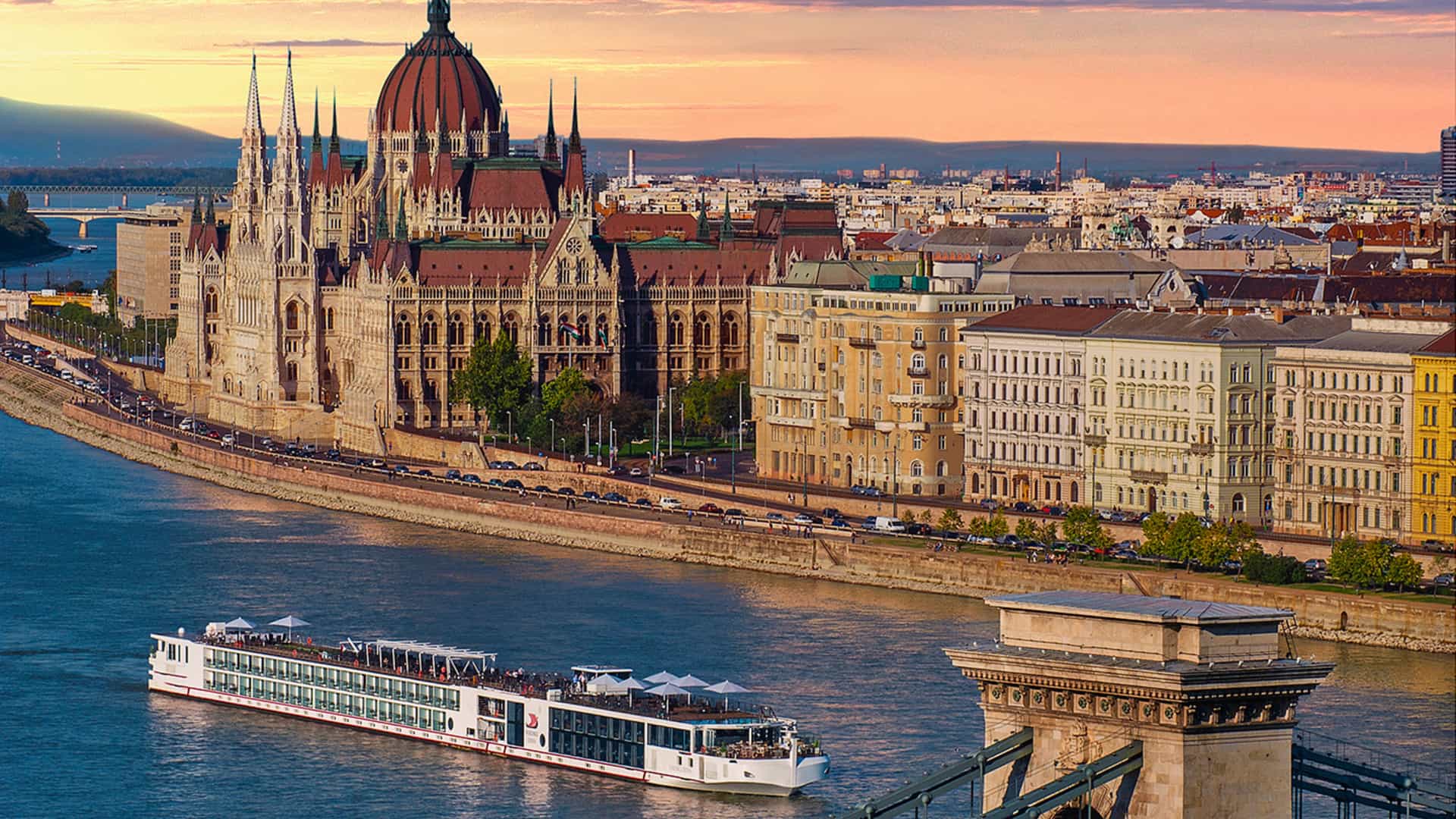
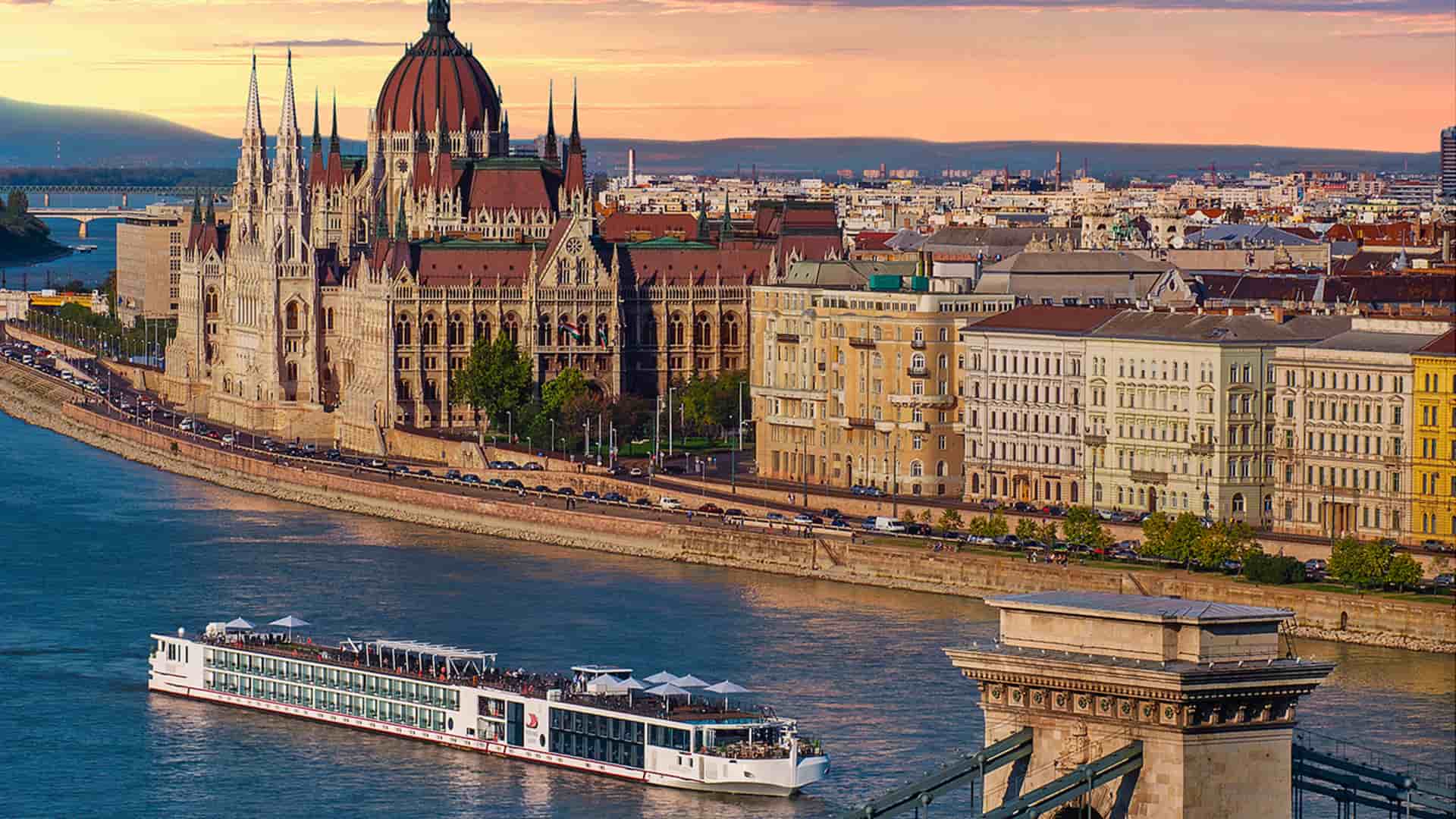
The journey begins in Budapest, where the Danube splits one city into two personalities.
On one bank, Buda's Castle District climbs a hill overlooking the river, its cobblestone streets and medieval fortresses steeped in history. Across the water, Pest unfolds in wide boulevards and Art Nouveau facades, a world apart from its sister city on the hill. Guests spend two days here before setting sail, enough time to walk both sides of what's often called the "Paris of the East." Cross the Chain Bridge on foot for a view that every postcard promises, then join the included Panoramic Budapest tour, which takes in the city's iconic sights on both banks of the river.
From there, guests can choose their own pace: a museum for the history, or the optional Budapest Thermal Bath excursion for a soak in the same centuries-old baths locals still swear by.
Days 3 to 4: Vienna, Austria

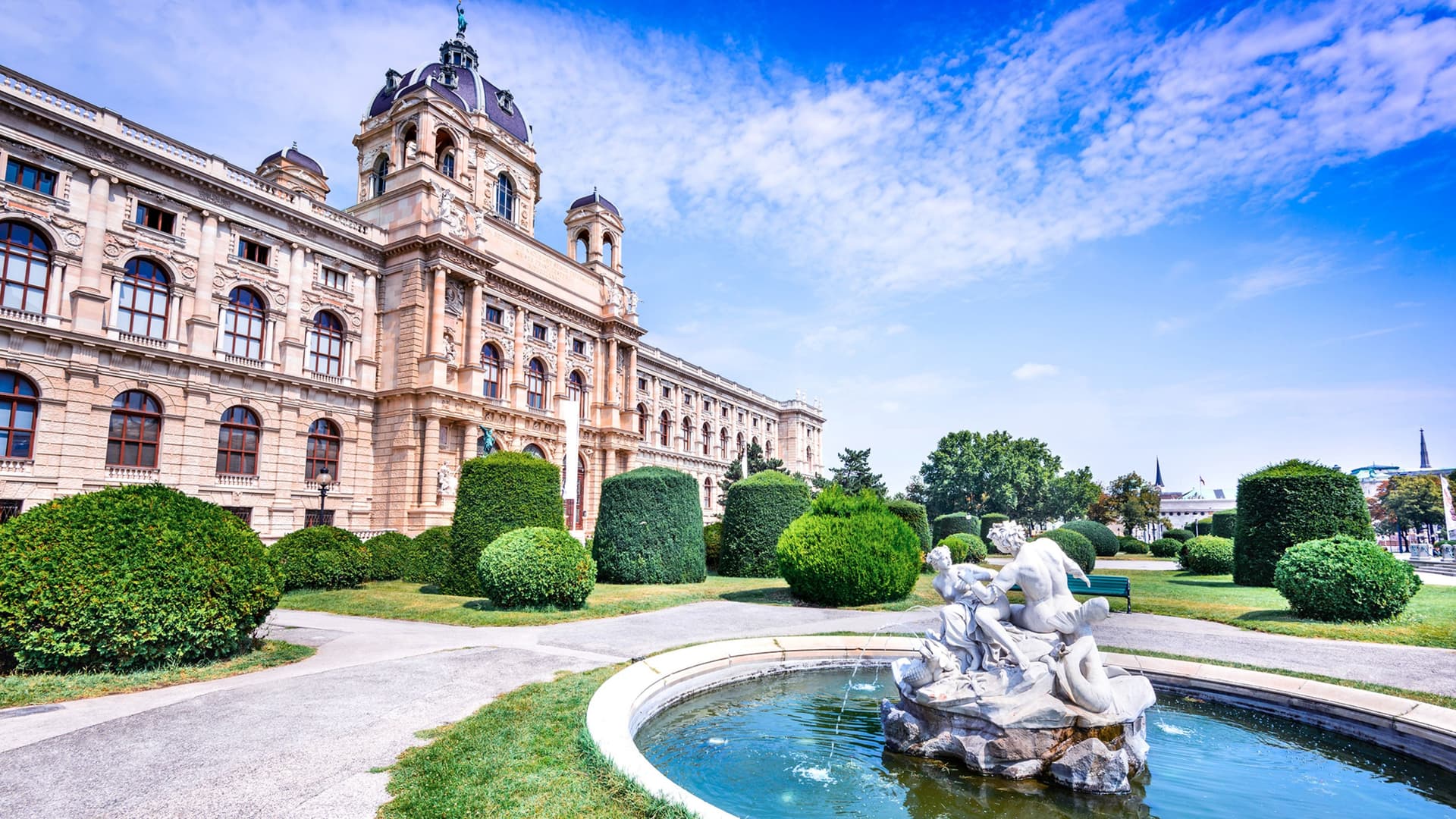
Two full days in Vienna are barely enough. The included Panoramic Vienna tour covers the architectural highlights first: palace facades, gilded opera houses and boulevards built to be walked slowly. But Vienna's coffeehouses aren't just a stop between sights; they're a genuine institution, and the city's coffeehouse culture even holds a spot on UNESCO's list of Intangible Cultural Heritage. Here, locals treat an afternoon over an Einspänner (a traditional Viennese coffee drink topped with a thick layer of whipped cream) and something layered and buttery as one of life's small pleasures, not a break in the schedule.
That love of ritual runs through the city's palaces too, where centuries of imperial patronage filled the halls with art. The Habsburgs' collection, now held at the Kunsthistorisches Museum, is worth building a free afternoon around. And for guests who want to hear the city's musical history rather than just walk past it, the optional Mozart & Strauss Concert is an evening well spent.
Day 5: The Wachau Valley & Melk, Austria
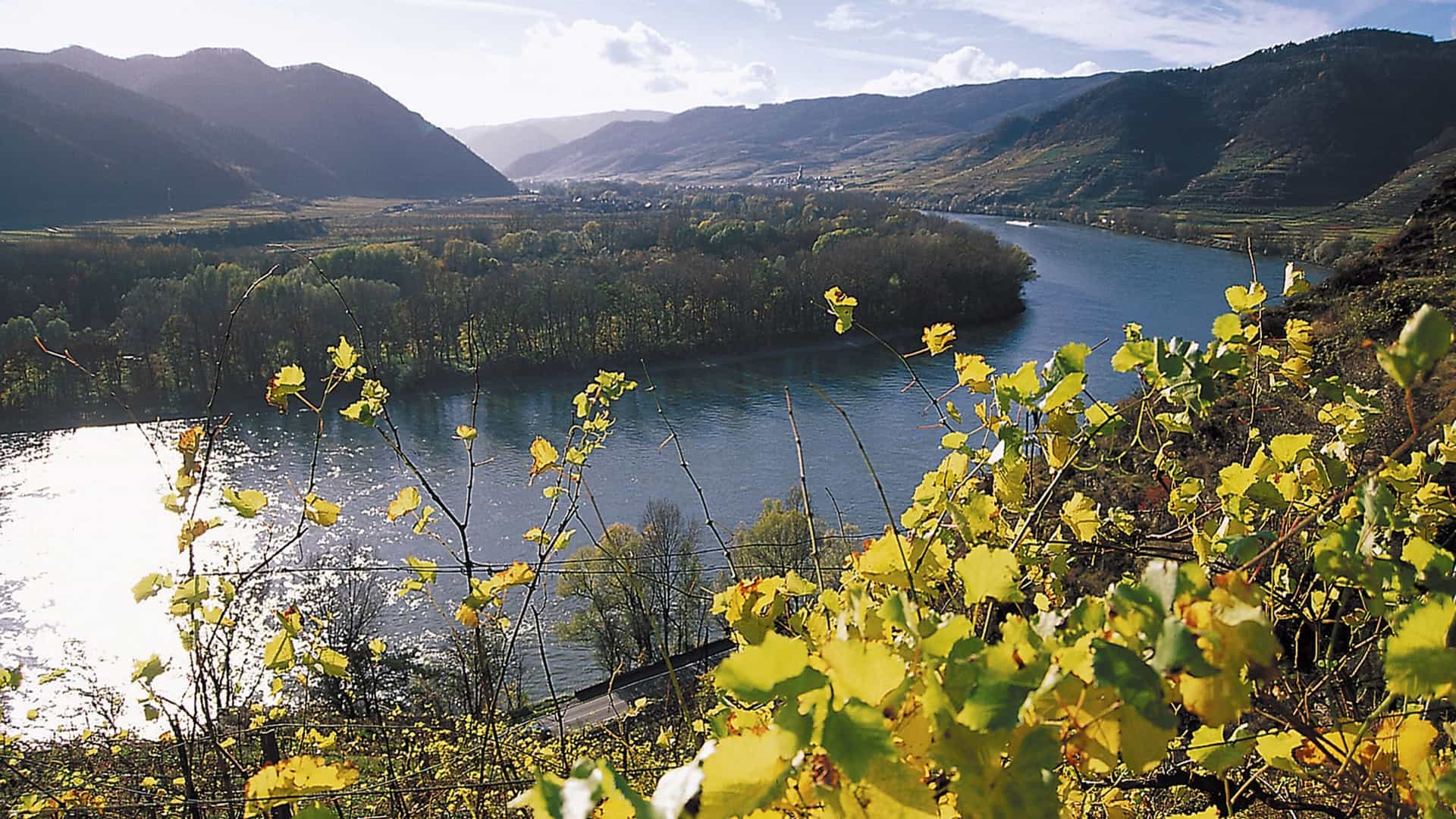
Some of the best parts of a river cruise happen without leaving the ship. For roughly 18 miles, often called the most scenic stretch of the entire Danube, the Wachau Valley unfolds in terraced vineyards and hillside villages that seem built for exactly this vantage point, perfectly paired with a lounge chair on deck and a glass of the valley's own wine.
The ship docks in Melk long enough for the included Melk Abbey tour, a chance to walk through a 900-year-old hilltop landmark with 365 windows, one for every day of the year, and a library where illuminated medieval manuscripts share space with ceiling frescoes by Paul Troger.
Day 6: Passau, Germany
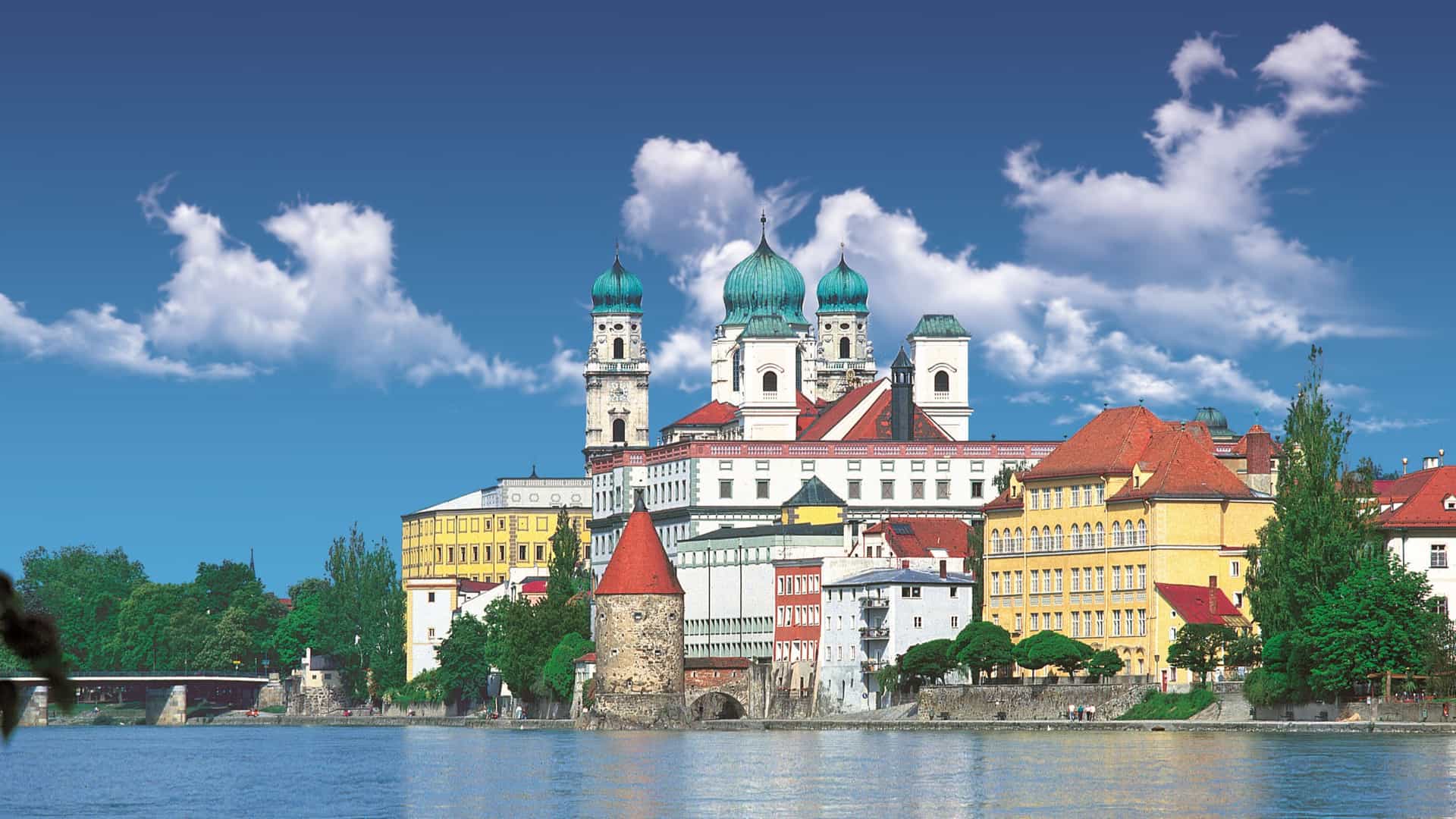
Passau has held a strategic position for more than 2,000 years, since the Celts first settled where the Inn, Ilz and Danube rivers meet, a confluence that earned it the nickname City of Three Rivers. That position built real wealth over the centuries, and it still shows in graceful arcades, rococo facades in soft pastel colors and St. Stephen's Cathedral, home to one of Europe's largest pipe organs.
Passau also marks the border where Germany gives way to Austria, and it rewards guests who slow down rather than rush through. The included Passau Walking Tour winds through the city's Italianate streets, right where all three rivers converge. Optional add-ons here often include a day trip into Salzburg or a leisurely E-bike ride along the Inn River, though offerings vary by departure.
Weather across this route can shift as much as the scenery: expect cooler mornings in Budapest and Vienna, milder days through Germany's wine country and a good chance of rain by the time you reach Amsterdam. Comfortable walking shoes matter more than anything else here, since nearly every port includes an optional guided walking tour.
Day 7: Regensburg, Germany
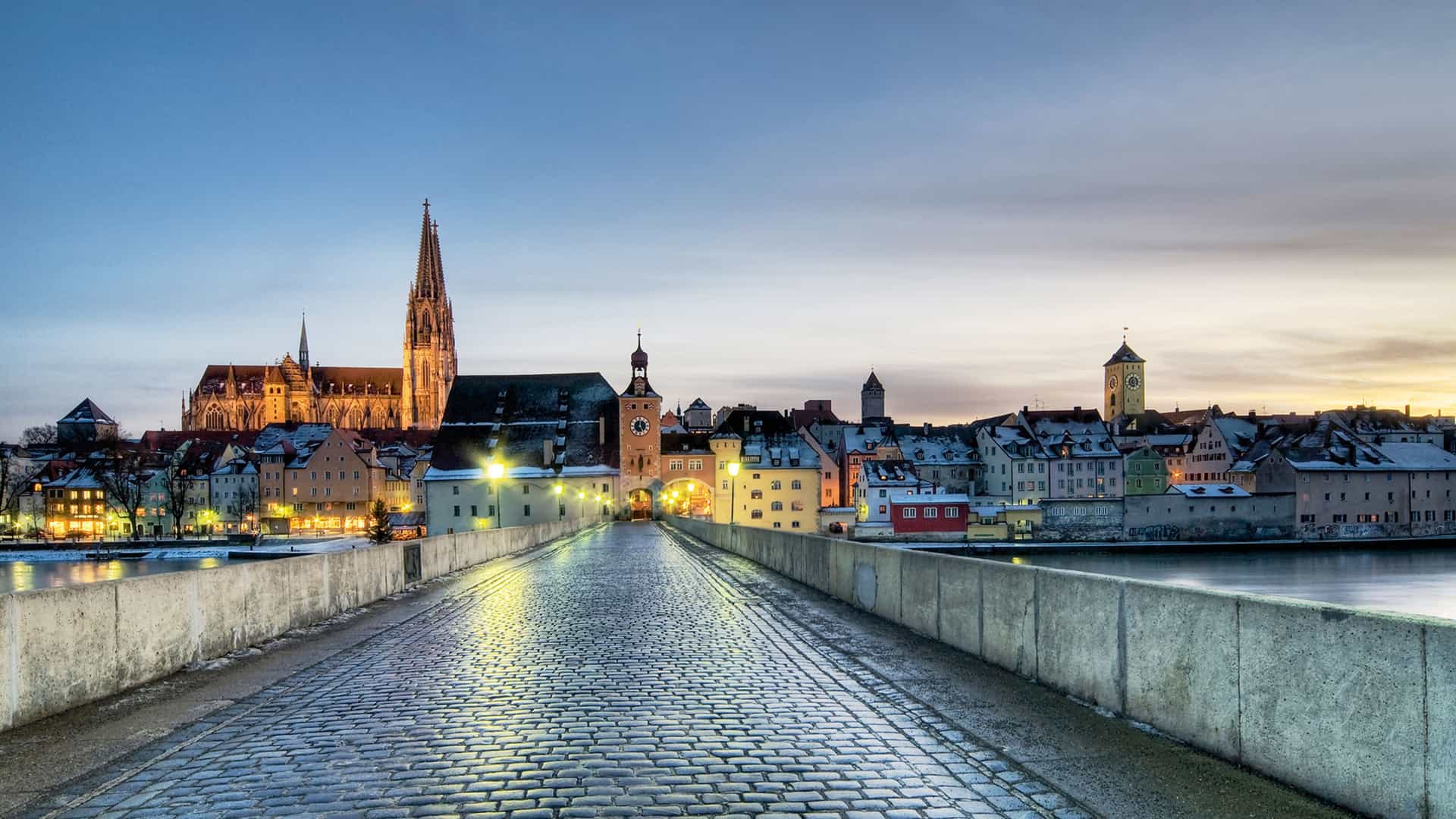
Regensburg came through World War II largely untouched, part of why it's considered one of Europe's best-preserved medieval cities, the oldest city on the Danube and a UNESCO World Heritage Site. The 12th-century Old Stone Bridge, engineered with 16 arches, remains one of the city's signature sights and St. Peter's Cathedral is widely regarded as Bavaria's finest Gothic building. The Neupfarrplatz square carries more history than its size suggests, having served over the centuries as a Jewish quarter, a bustling marketplace, and later the site of Nazi book burnings, a layered past that's easy to walk past without noticing.
Two included tours cover the city from different angles, and you get to choose one: Regensburg by Foot takes in the medieval streets and architecture, while Historic Regensburg & Jewish Heritage focuses on the city's Jewish history. Guests looking for something more hands-on can opt into the Sausage Making Class, learning the craft of weisswurst at a Regensburg institution.
Day 8: The Main-Danube Canal & Nuremberg, Germany
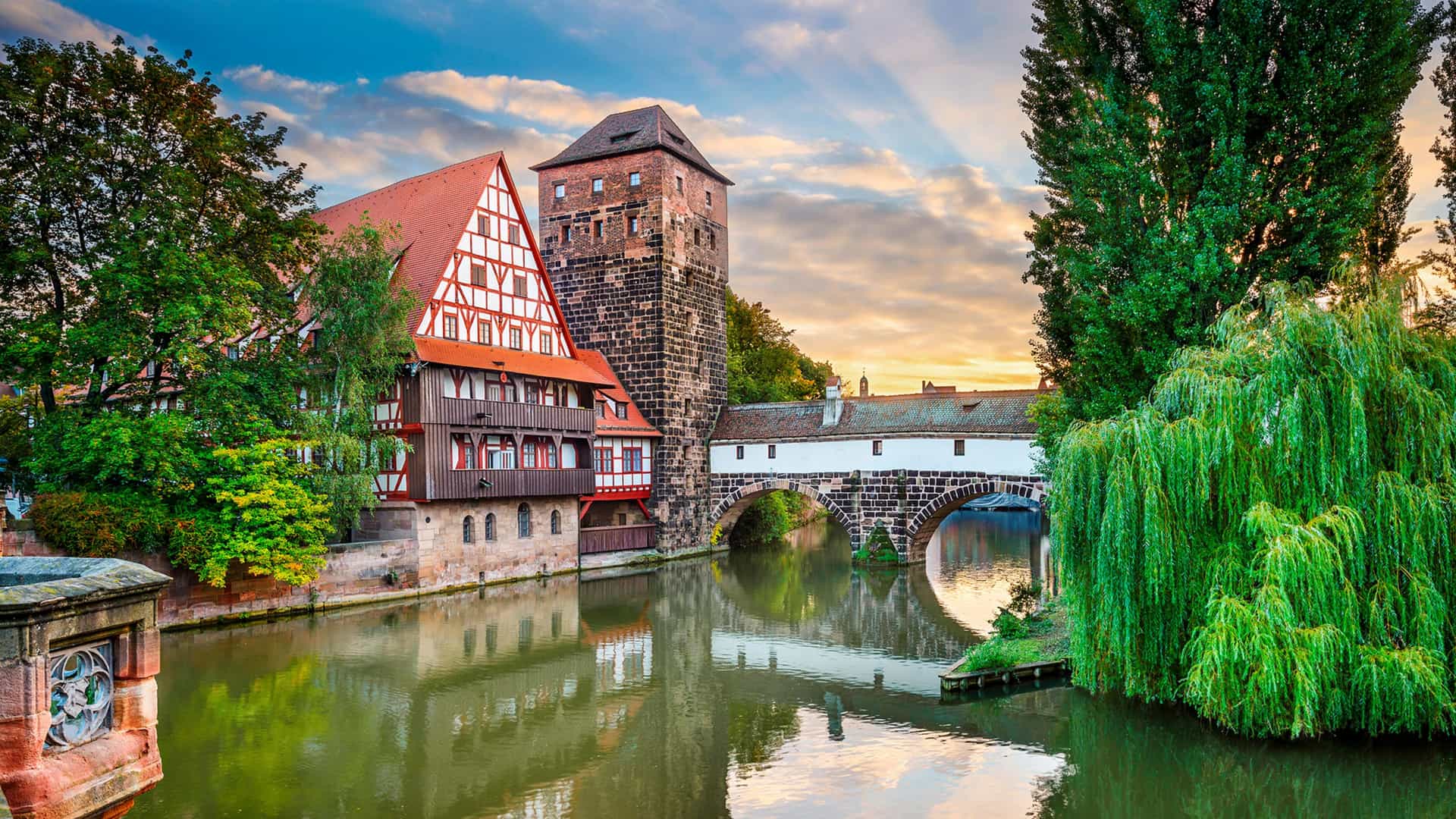
Charlemagne first dreamed of linking the Rhine, Main and Danube more than 1,200 years ago, and the Main-Danube Canal made it reality. Watching the ship inch through lock after lock in a single morning is one of those moments that make river cruising different from anything at sea. The canal itself is an engineering feat: 16 stair-step locks carry ships across a network stretching roughly 2,200 miles through 10 countries, from Holland's North Sea coast to the Black Sea.
Nuremberg, reached by afternoon, is Bavaria's second-largest city. Its half-timbered houses and spired Gothic churches survive alongside roughly three miles of the original medieval walls and some 80 watchtowers. Long known for metalwork and toymaking, Nuremberg's history is also inseparable from the 20th century, including the Palace of Justice, site of the postwar trials, and Zeppelin Field, once used for Nazi rallies.
The included Nuremberg Through History tour covers the city's full arc, medieval trade town to postwar landmark, in a single walk. For a lesser-known chapter of that history, the optional Surviving the War excursion visits the underground chambers where the city's art was hidden for safekeeping.
Day 9: Bamberg, Germany
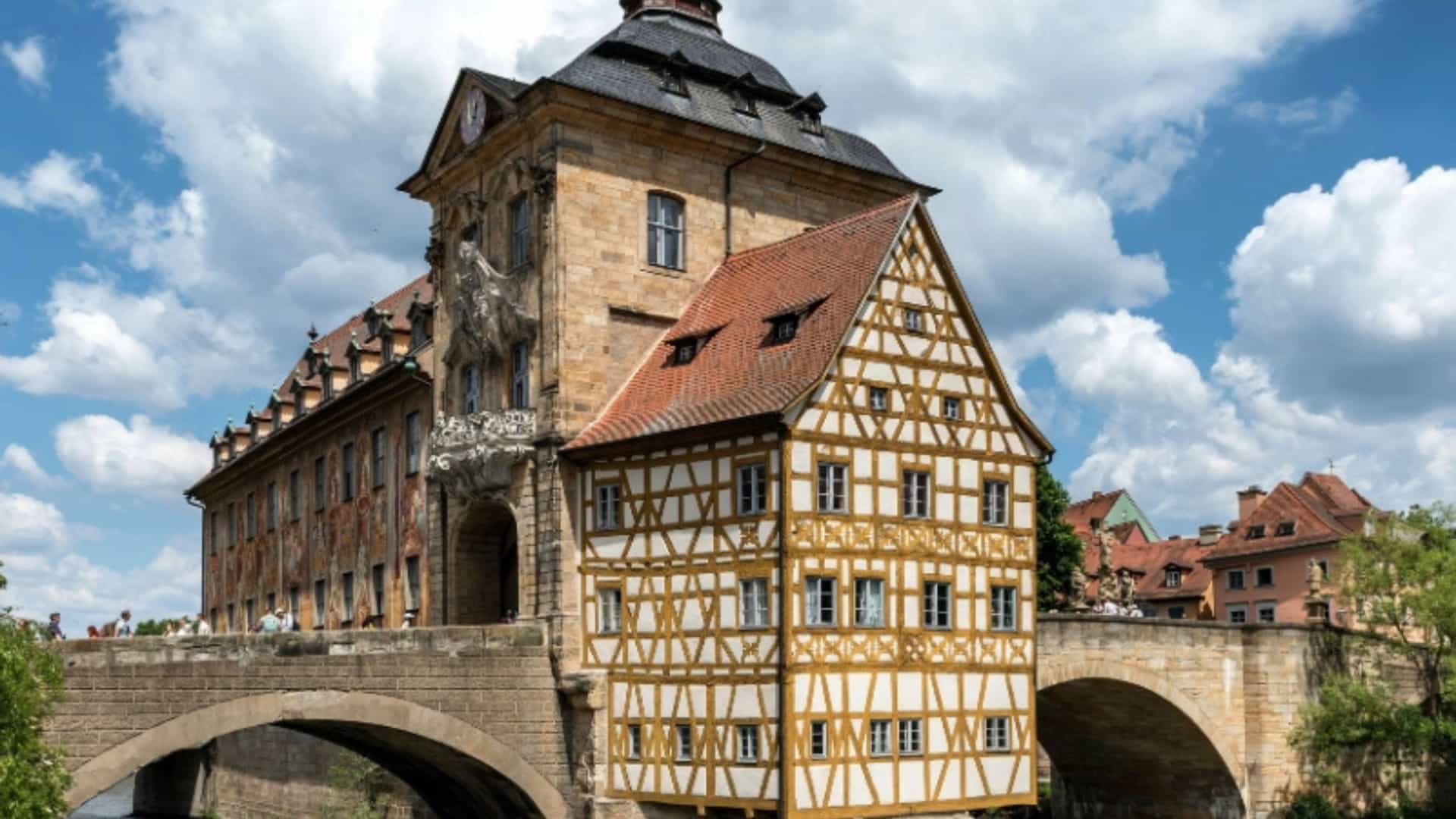
Founded in 902, Bamberg still looks the part of a medieval city, its winding streets lined with baroque patrician houses. The 11th-century cathedral holds the tombs of Holy Roman Emperor Heinrich II and Pope Clement II, and the Altes Rathaus, perched on a twin-arched bridge over the Regnitz River, is one of the town's most photographed corners.
The included Bamberg Walking Tour takes in these sights before you're free to track down a glass of rauchbier, the local smoked beer. Guests who want to see more of the surrounding region can opt into the Franconian Countryside excursion, which pairs the area's stunning architecture with a tasting from one of its roughly 300 breweries.
Day 10: Würzburg, Germany
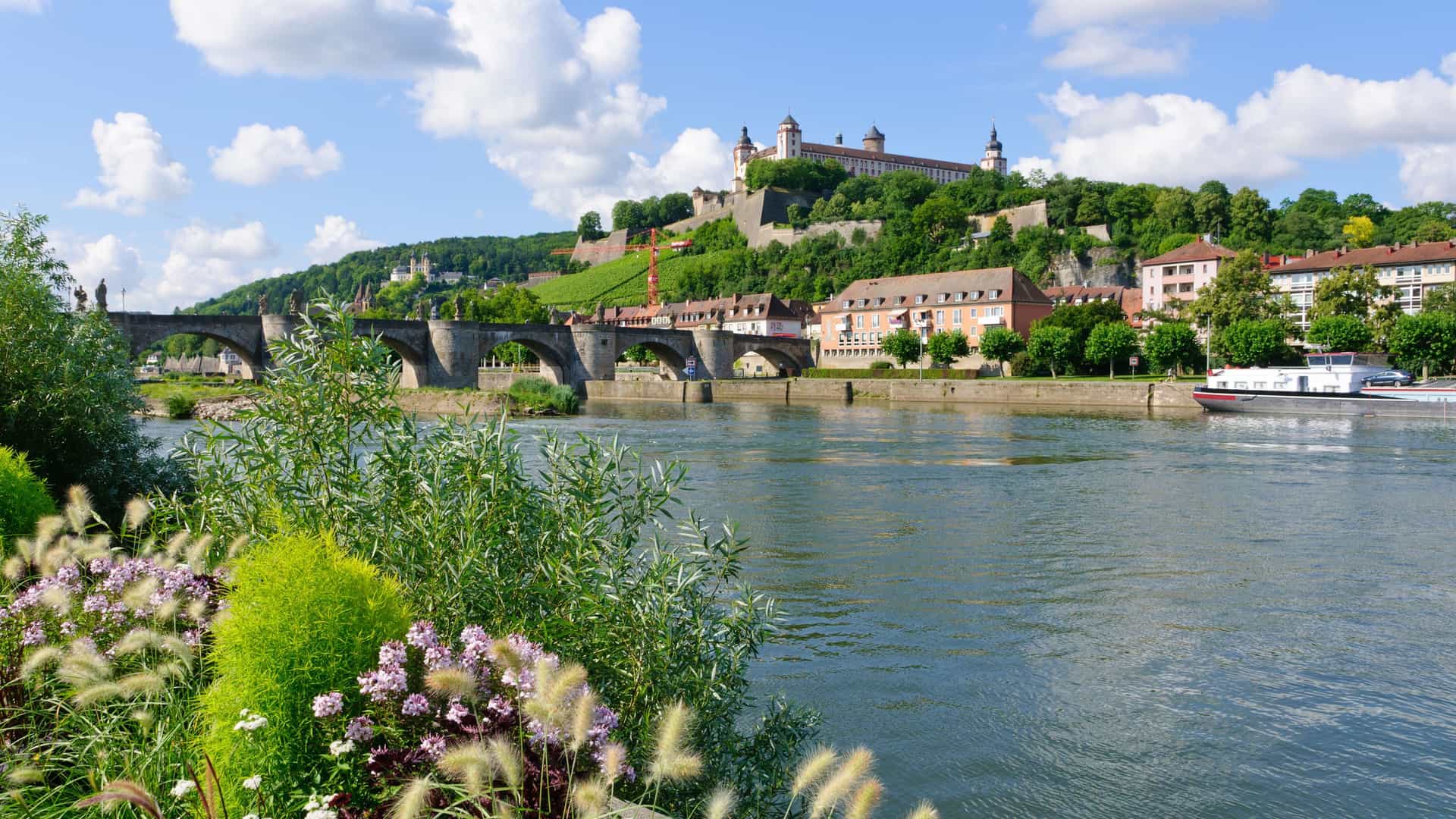
Würzburg was heavily damaged during World War II and rebuilt with care. Today, this university city, surrounded by Franconian vineyards, is a showcase for baroque architecture, a highly ornate building style that originated in late 16th-century Rome. The Bishops' Residenz, built in 1744, is the standout: a sweeping staircase and ceiling frescoes by Giovanni Tiepolo make the case for what a prince-bishop with unlimited funding and good taste in artists could produce. The medieval Old Main Bridge and Marienberg Fortress, which started life as a Celtic hill fort, round out a city that also sits at the center of one of Germany's most established wine regions.
The included Würzburg Residenz & Walk covers the palace and its grounds, Tiepolo frescoes included. For guests willing to venture farther, the optional excursion to Rothenburg ob der Tauber follows the Romantic Road to one of Germany's last remaining walled medieval towns.
Day 11: Wertheim & the Spessart Region, Germany
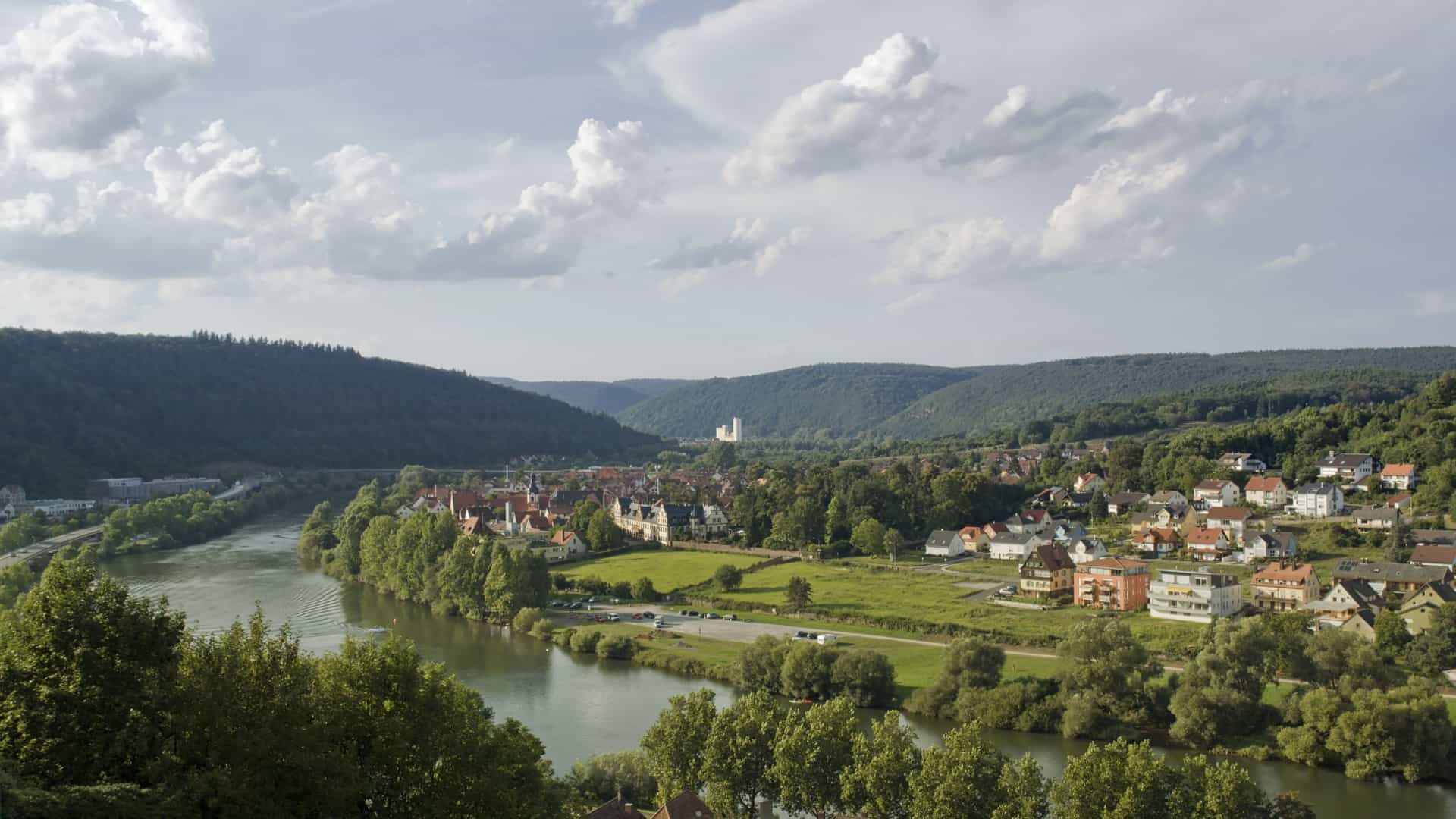
Wertheim sits where the Main and Tauber rivers meet, a location valuable enough that local dukes built a castle here in the 12th century. The Thirty Years' War took it down, but its ruins still watch over the half-timbered town center from the hilltop, and the Pointed Tower has marked this river junction for roughly 800 years. Wertheim's merchant-town history has given way to a modern claim to fame, Franconian wine.
The included Wertheim Walking Tour covers the half-timbered town center, and guests looking for a deeper look at the region's history can opt into German Aristocracy Today, a Privileged Access visit to the nearby castles of Mespelbrunn and Löwenstein. From here, the ship sails on through Germany's Spessart region, a stretch of quiet villages and old-growth forest that inspired the Brothers Grimm, who grew up nearby in Hanau and drew on this exact landscape for their fairy tales.
Day 12: The Middle Rhine & Koblenz, Germany
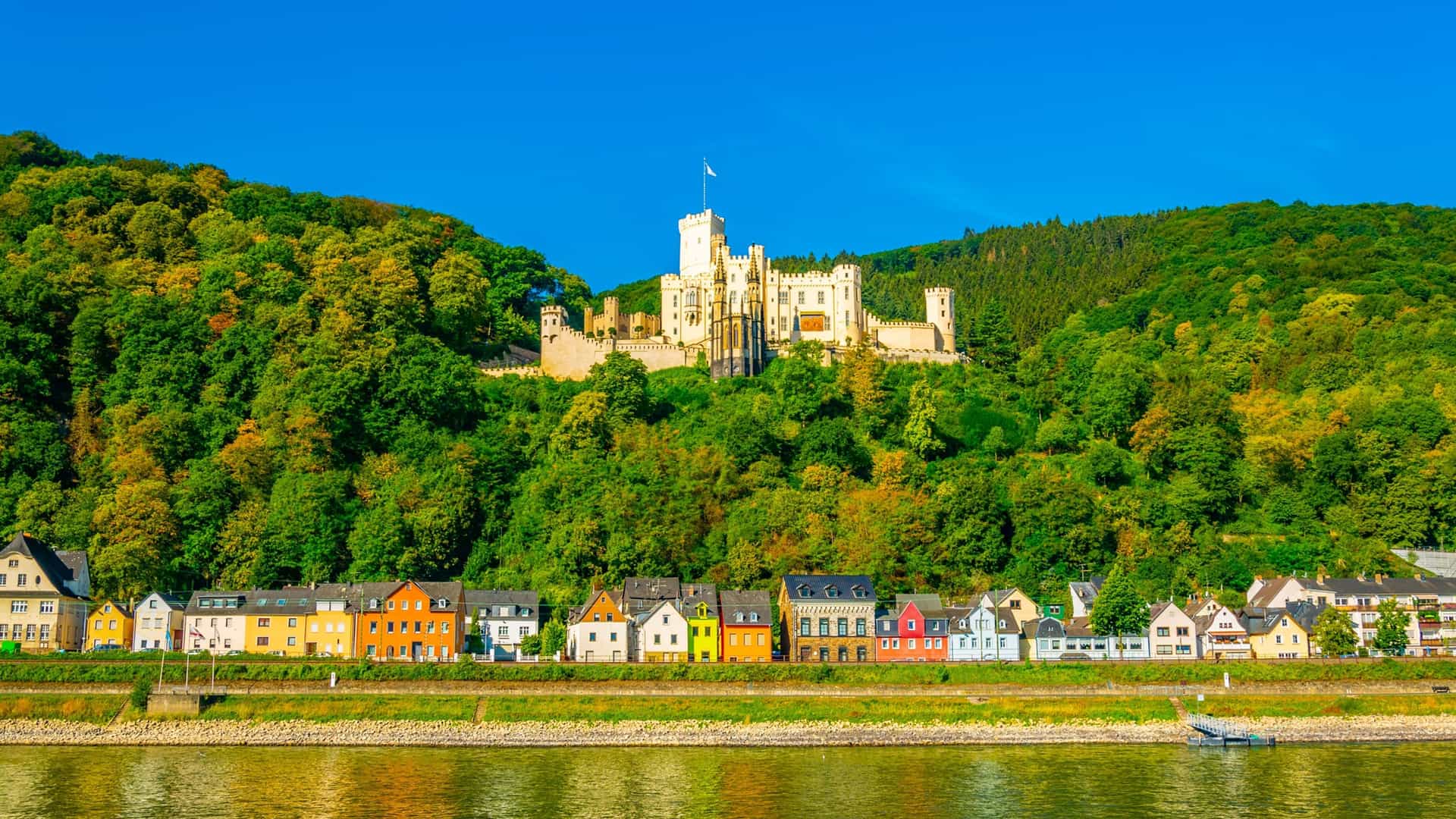
The Middle Rhine is the stretch that river cruise brochures are built around, and for good reason. Vineyards climb hillsides too steep for machines, so grapes here are still picked by hand, and castle after castle lines the banks, each with its own story. Watch for Lorelei Rock at the river's sharpest bend, long said to be home to a maiden whose song lured sailors too close to the rocks.
The ship docks in Koblenz, a city with more than 2,000 years of history, where a massive equestrian statue of Prince William I marks the German Corner and the Basilica of St. Castor, dating to 836, stands as the town's oldest building. The Teutonic Knights set up their first base here in 1216, a fact that tends to surprise guests who come for the scenery and leave with a history lesson.
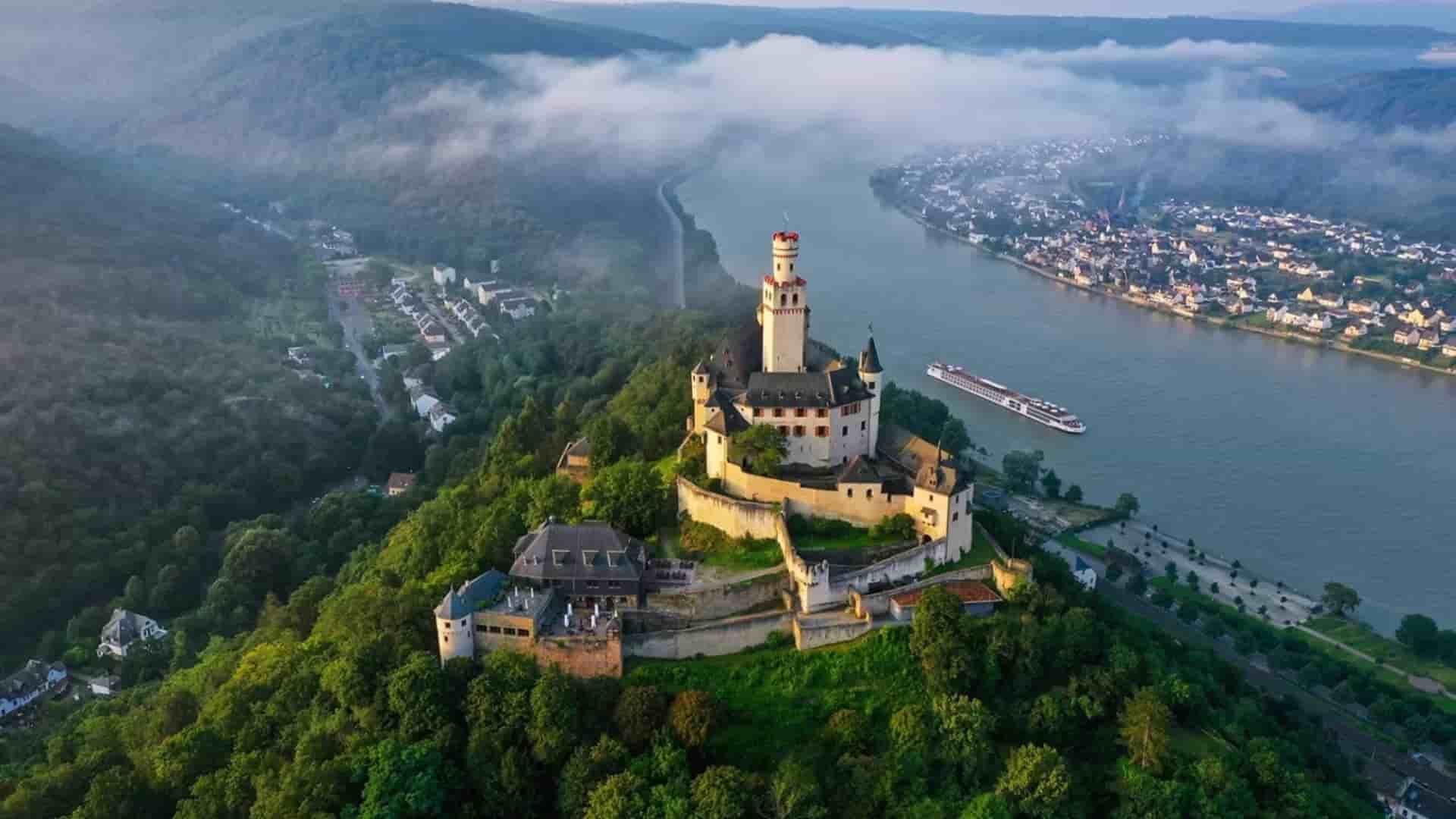
The included Historic Koblenz tour is an easy, unhurried way to take it all in, and the optional visit to Marksburg Castle goes a step further: it's the only medieval-era stronghold in the entire Rhine Valley that's never been destroyed.
Day 13: Cologne, Germany
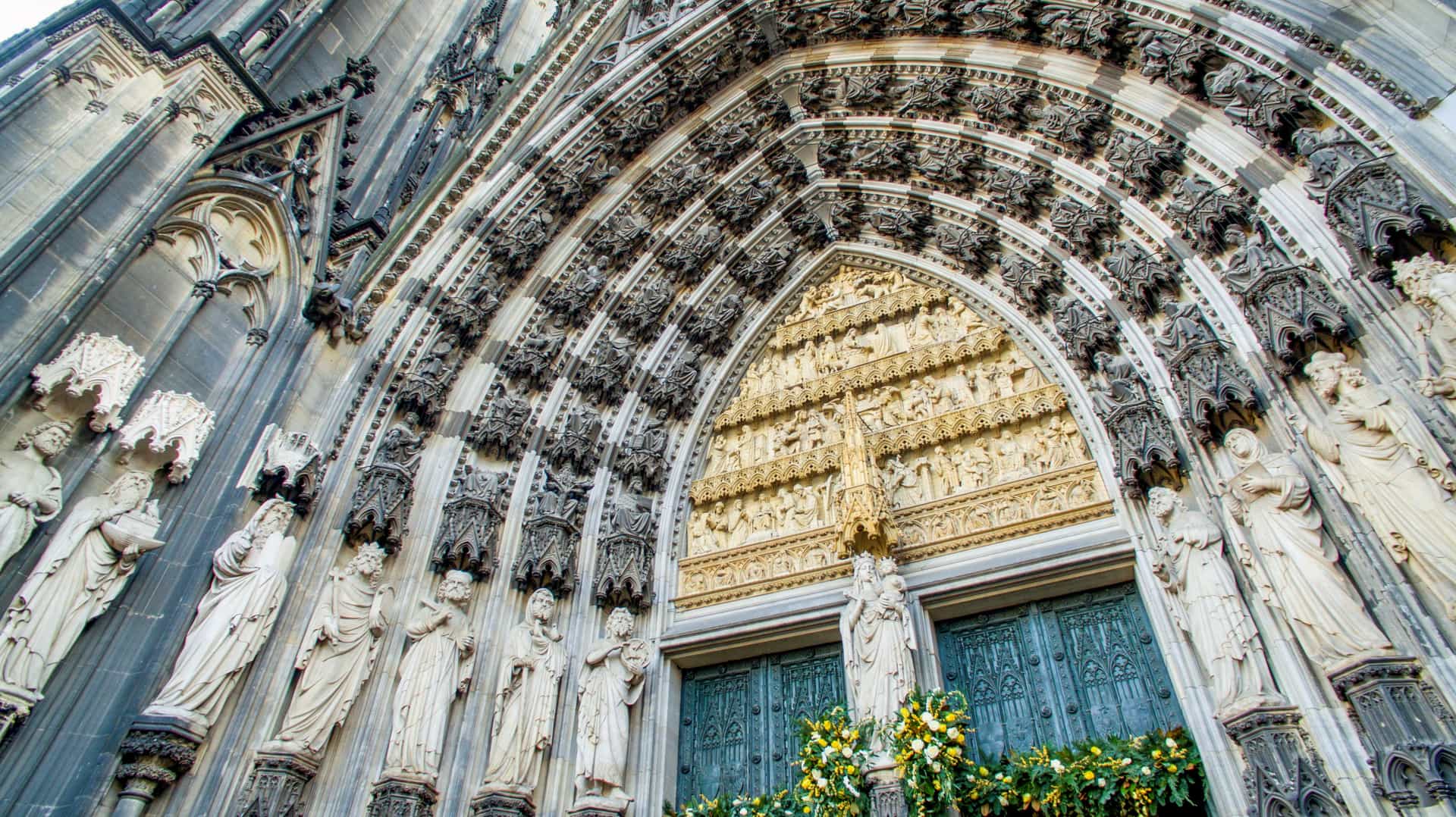
Cologne's Old Town is a pleasant place to wander, but its Gothic cathedral, a UNESCO World Heritage Site, is the real draw. It's a structure so massive and detailed that it took more than 600 years to complete. The included Cologne Walking Tour weaves through the Old Town before ending at the cathedral's towering facade, which dominates the skyline exactly as intended.
For a view no walking tour can match, the optional Zeppelin Flight over Cologne offers a bird's-eye look at the cathedral and the city surrounding it.
Day 14: The Waal, Merwede & Kinderdijk, The Netherlands
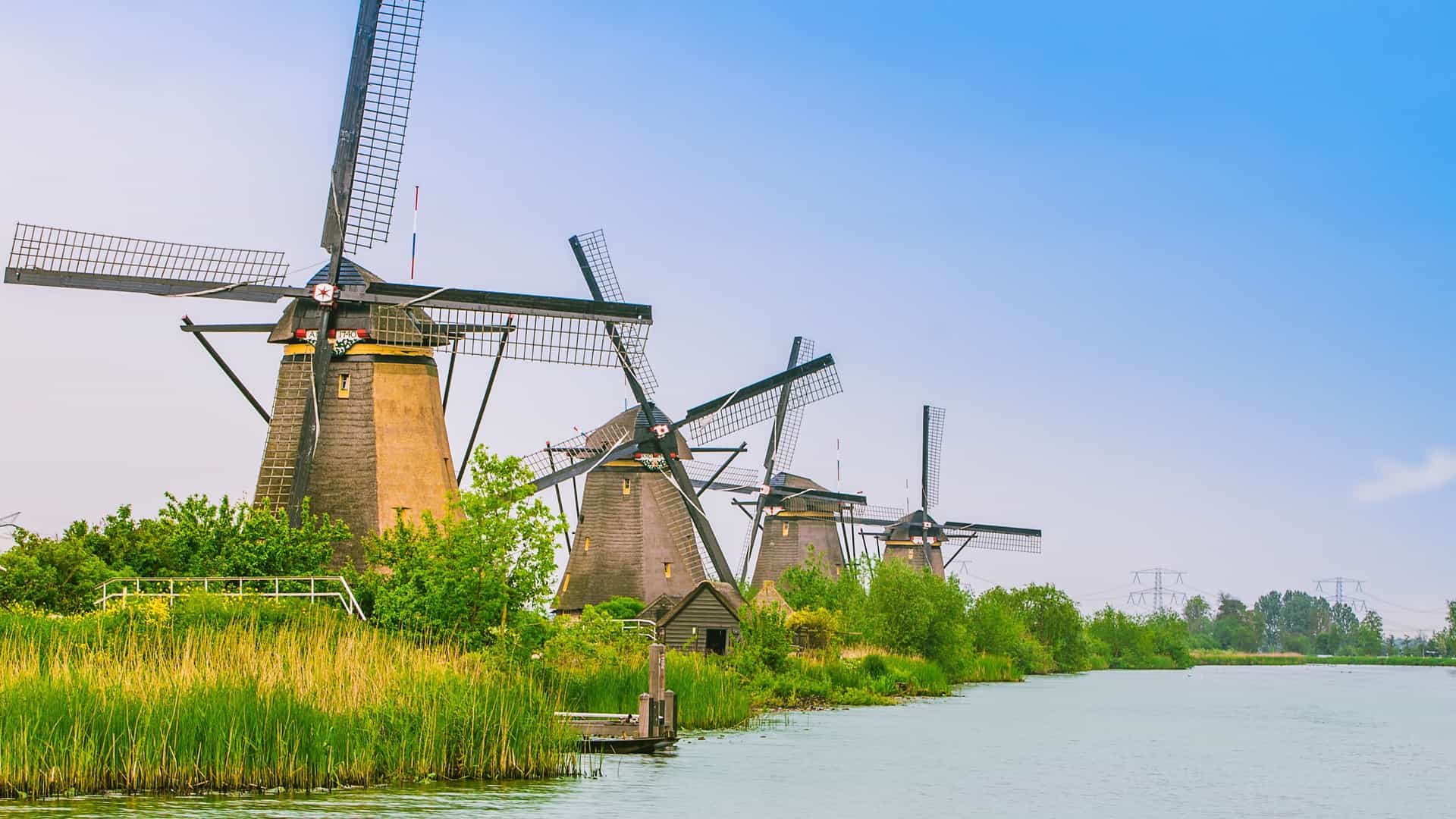
The journey's final full day sails quietly through the Waal and Merwede, deep into the Rhine-Meuse-Scheldt Delta, past flat farmland, tidy villages and the occasional grazing herd of Friesian cows. Much of this land wouldn't exist in its current form without centuries of human effort: windmills and dikes reclaimed it from the sea, and Kinderdijk is where that engineering is easiest to see. Nineteen 18th-century windmills still stand across the polders here, well-preserved enough to have earned UNESCO World Heritage status, and literary-minded guests may recognize the setting from the 1865 novel Hans Brinker, in which a boy plugs a leaking dike with his finger and becomes a local legend of his own.
The included Kinderdijk Windmills tour is the classic way to see them, on foot among the polders, while the optional Kinderdijk by Vintage Barge excursion takes guests out on the water for a Viking-exclusive visit to the oldest windmill in the group.
Day 15: Amsterdam, The Netherlands
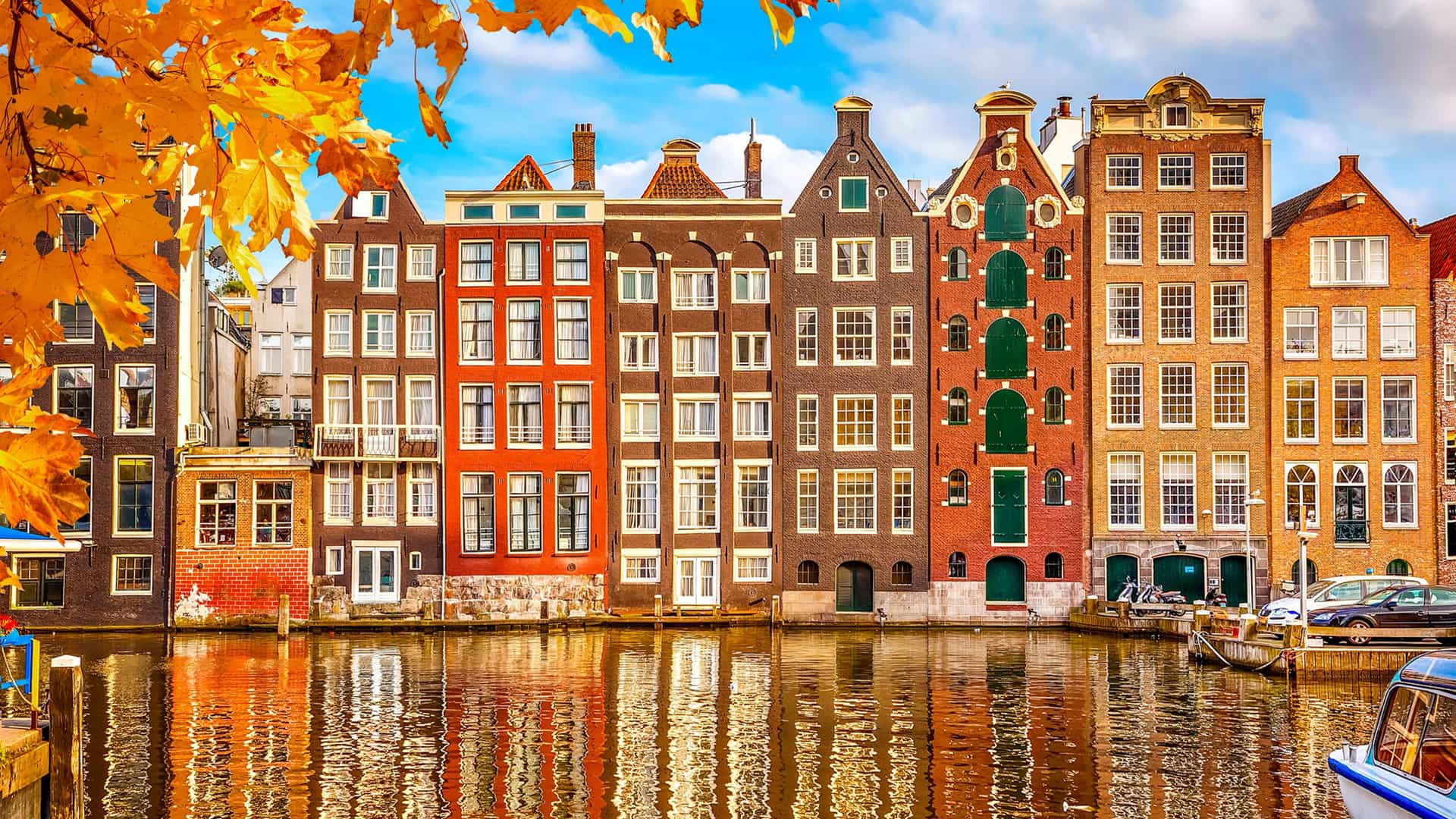
The cruise ends in Amsterdam, where guests either say their goodbyes and head home or extend the trip with a few extra days in one of Europe's most walkable cities. Guests who booked flights through Viking Air have ground transfers included, one less detail to manage on departure day. For travelers not ready to leave, this is the natural jumping-off point for a post-cruise extension.
Extend Your Journey: Pre- & Post-Cruise Extensions
Viking offers extension packages that add a few days before or after the Grand European Tour. Each one is built around a similar baseline: hotel nights, daily breakfast and all transfers, along with either a Viking Host to help plan your time or, on premium versions, a small-group guided walking tour of the city.
Guests boarding in Budapest can arrive a couple of days early with a two-night extension near the Castle District. A premium upgrade is also available for guests who want a more elevated stay closer to the Chain Bridge. Prague offers the same standard-or-premium choice for travelers who'd rather start the trip somewhere other than the embarkation city. On the other end of the itinerary, a two-night Amsterdam extension puts guests along the city's historic canals, or those who want to see more of the country can opt for a longer Best of Holland extension, trading the city stay for the North Sea coast with day trips to Delft and Gouda's historic centers and The Hague's museums, plus full escort by a Viking Tour Director throughout.
Extension availability, hotels and inclusions vary by departure, so it's worth asking a Cruise Expert what's currently open for your dates.
Why Sail the Grand European Tour with The Cruise Web
15 days, four countries and a route that changes character each day make the Grand European Tour one of the most layered itineraries on the river. That's exactly the kind of trip worth planning with a personal travel professional, someone who can provide unbiased, expert guidance and weigh whether a pre- or post-cruise extension is worth the extra nights. The best part? No booking fees.
Our Cruise Experts can help you:
- Compare Budapest-to-Amsterdam & Amsterdam-to-Budapest departures to find the best fit for your schedule.
- Decide which pre- or post-cruise extension makes sense for your trip.
- Coordinate flights, transfers & any hotel stays.
- Access exclusive Viking promotions & limited-time offers.
Ready to sail the Danube, Main and Rhine? Give our Cruise Experts a call at 1-800-377-9383 or visit CruiseWeb.com to start planning your Grand European Tour today.
View Deals with Viking River Cruises DealsNote: The contents of this article are accurate as of the publication date. Viking's itineraries, excursions and amenities are subject to change at any time.
Frequently Asked Questions
How long is Viking's Grand European Tour?
The Grand European Tour is a 15-day river cruise.
What rivers does the Grand European Tour sail?
The itinerary sails the Danube, Main and Rhine rivers.
Does the Grand European Tour sail in both directions?
Yes. Depending on the departure date, the itinerary sails either from Budapest to Amsterdam or from Amsterdam to Budapest. The ports and inclusions are the same either way. Keep in mind, the itinerary is subject to change at any time.
How many guided tours are included on the Grand European Tour?
The itinerary includes 12 guided tours across stops in Hungary, Austria, Germany and the Netherlands.
Does the Grand European Tour include airfare?
No. Airfare isn't included in the base fare. Viking Air is available separately and includes roundtrip transfers when booked.
Can I extend my trip before or after the Grand European Tour?
Yes. Viking offers pre-cruise extensions in Budapest and Prague, and post-cruise extensions in Amsterdam, including a longer Best of Holland option.
Why book the Grand European Tour with The Cruise Web?
The Cruise Web's travel advisors are certified Viking River Cruise experts and have been helping travelers plan cruise vacations for over 30 years. With an A+ BBB rating and no booking fees, our Cruise Experts can help you access exclusive onboard credit and deals, compare extension options and coordinate flights and transfers around your cruise.