Viking Expedition Ships Explained: The Ships Built to Take You Further
Published July 23, 2026
Updated July 23, 2026
Travel Experts
at The Cruise Web
What does it take to build a ship that can push through Antarctic ice one season and navigate the Great Lakes the next?
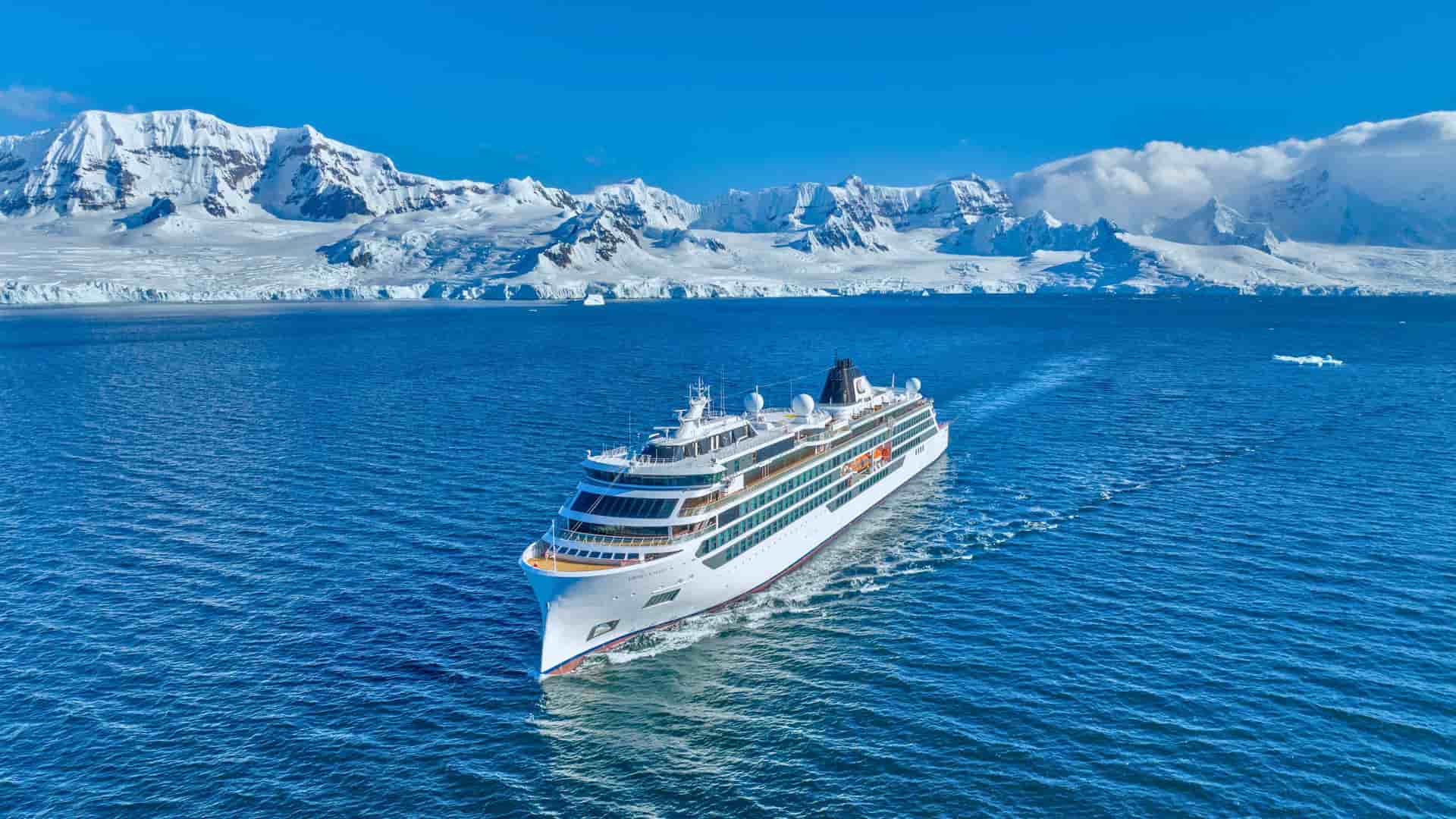
Viking's answer is Viking Octantis and Viking Polaris, a two-ship fleet engineered for exactly that kind of range. These expedition ships don't sail so much as they venture. Purpose-built as Polar Class 6 vessels, they're engineered to reach places most travelers only ever read about.
That kind of range doesn't happen by accident. Viking has always called itself the thinking person's cruise, built for curious travelers who want more than a deck chair and a view. That promise doesn't change from the rivers to the ends of the earth. Only the engineering required to deliver it does.
As one of the top Viking Cruises agencies, we get asked constantly: what's the difference between Viking's expedition ships? Here's everything you need to know, from how these ships were built to where they'll actually take you.
Key Takeaways
- Viking Octantis & Viking Polaris are purpose-built Polar Class 6 expedition sister ships, engineered to sail from Antarctica to the Great Lakes.
- Each ship carries just 378 guests & is cared for by a crew of ~260.
- Every stateroom includes a private Nordic Balcony, floor-to-ceiling glass that lowers into an open-air viewing platform.
- The Hangar, an industry-first enclosed marina, launches Zodiacs, kayaks, Special Operations Boats & two submarines from a sheltered, stable platform.
- The Science Lab is developed in partnership with the University of Cambridge & Akvaplan-niva, turning every voyage into a working research expedition.
- Wi-Fi, dining & spa access are included across both ships.
- A complimentary shore excursion is included in every port of call.
Built for the Edges of the Map
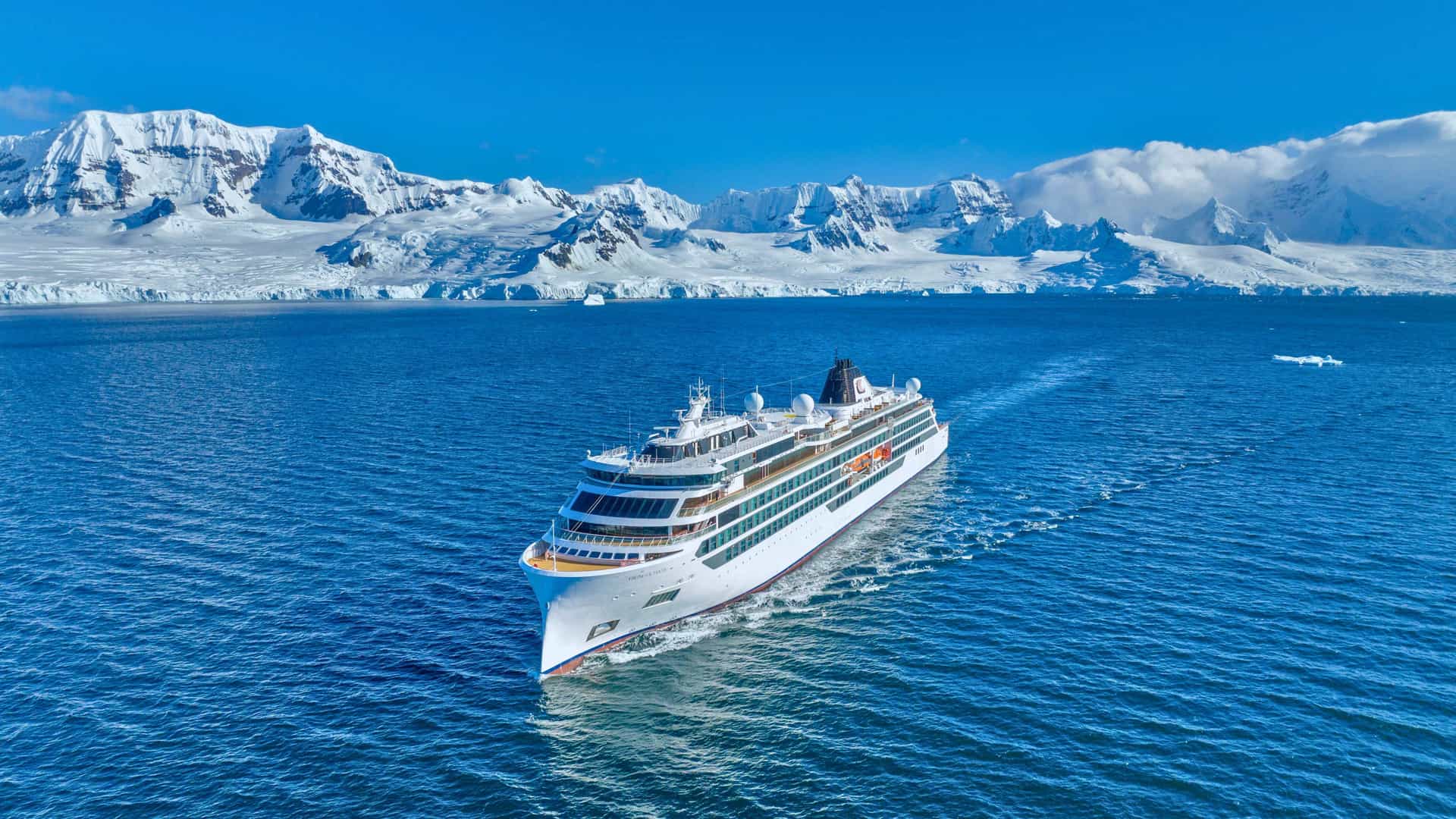
That engineering started with a blank hull. Maritime architects and interior designers worked alongside world-renowned expedition leaders, hotel operations, and design teams from the earliest sketches, each department shaping a ship that had to perform in Antarctic ice while still providing the Viking ambience the moment guests stepped aboard.
The result: two purpose-built Polar Class 6 vessels, Viking Octantis and Viking Polaris, each 665 feet long with a 77-foot beam and a top speed of 16 knots. Both ships carry just 378 guests, cared for by a crew of about 260, a passenger-to-crew ratio of roughly 1.5 to 1. Both sail under Norwegian registry, tying them back to Viking's Scandinavian roots even at the edge of the map. The main difference is where they sail.
But the ships' first real voyage happened long before a single guest ever booked a cabin:
- The keel coin. Every Viking ship's life begins with a coin, welded into the vessel during the ceremonial first joining of steel, an old maritime tradition for good fortune.
- The float-out. Months later, she touches water for the first time.
- The tow. Viking Octantis traveled 4,825 miles over 21 days, entirely under tow, before a single system ran on her own power. Off Malta, in the Ionian Sea, Viking Star and Viking Sea, Viking's first two ocean ships, sailed out to meet her: three generations of the fleet, together at sea, before she'd ever carried a guest.
- Outfitting. She reached Norway soon after, where nine months of outfitting followed, every space checked and rechecked before she was ready for guests, the same meticulous standard that keeps the Viking experience consistent across every fleet.
What's Onboard for Exploration
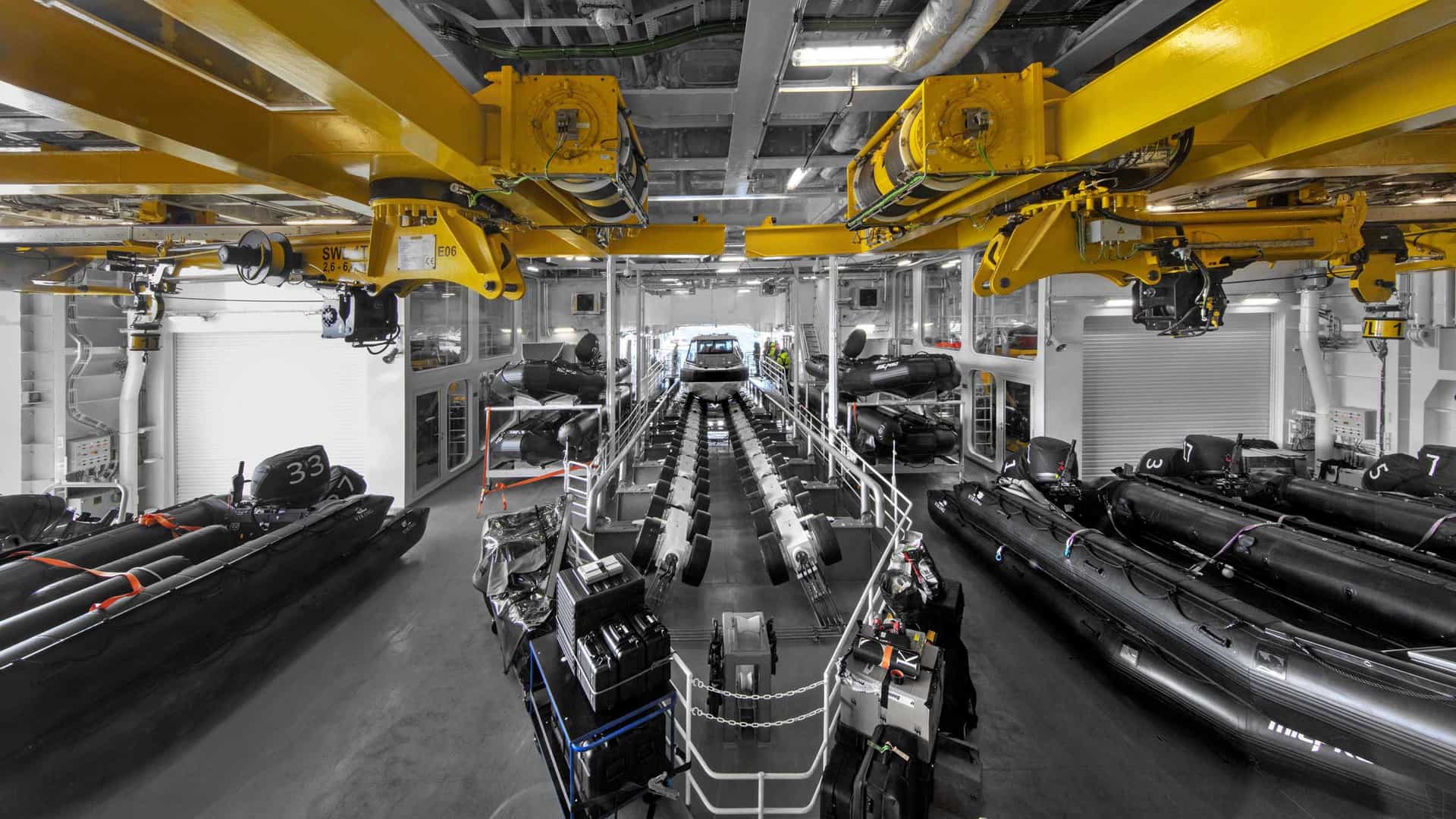
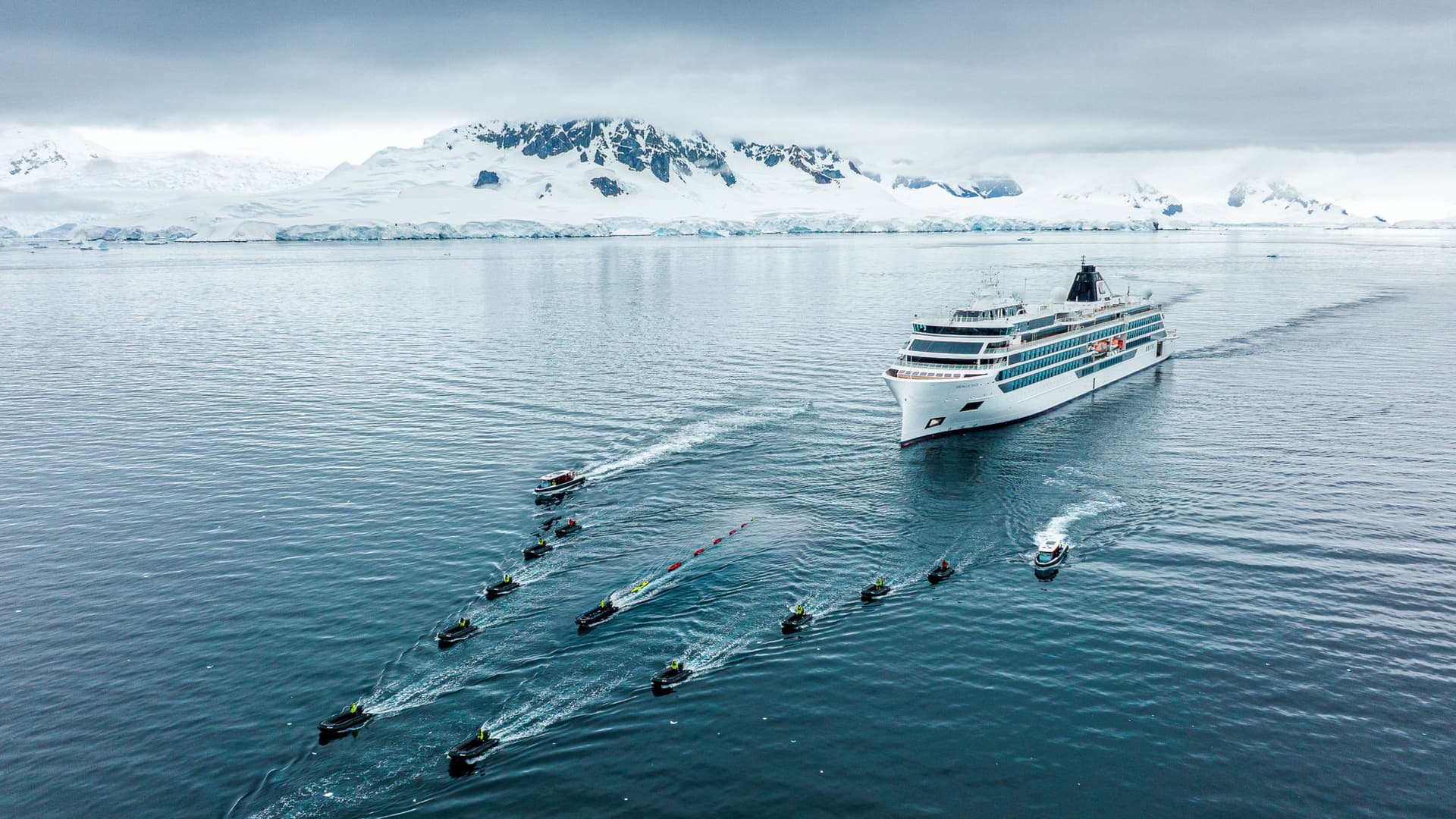
The Hangar is an industry first: an enclosed, in-ship marina that lets guests board expedition craft from a flat, stable surface, sheltered from wind and waves, before gliding out to sea through the ship's slipway.
From inside The Hangar, guests set out in one of four kinds of expedition crafts:
Craft | Fleet Size | Built For |
|---|---|---|
Special Operations Boats | 2 | 12-seat ice-strengthened aluminum boats with twin 450 hp water jets & convertible open or enclosed cabins |
Zodiacs | 17 | Professional-grade inflatable boats reinforced for polar conditions |
Kayaks | 9 | Tandem, rotomolded kayaks stable in both the Great Lakes & polar waters |
Submarines | 2 | Six-guest subs with revolving seats & nearly 270° spherical windows |
To keep excursions smooth even when anchoring isn't possible, the ships use a dynamic positioning mode that holds them steady at sea. Fin stabilizers reduce rolling while underway, and a U-tank stabilizer cuts rolling by nearly 50 percent when the ships are stationary.
Near The Hangar sits The Science Lab, a 380-square-foot wet and dry laboratory developed with the University of Cambridge's Scott Polar Research Institute and Akvaplan-niva. Guests can join the onboard Viking Resident Scientists in real fieldwork: collecting water samples, identifying migratory patterns, or assisting during a landing. A dedicated space called The Studio extends the program further, built around a partnership with the Cornell Lab of Ornithology, where guests can learn to identify the bird species migrating through wherever they're sailing.
Before heading out, guests can stop by Expedition Central, where the expedition team works one-on-one with them to plan the day, using 3D-printed maps and a spatial data visualization chart table.
The Cruise Web Advantage: Submarine dives aren't available on every itinerary and can fill up fast once booking opens. At no cost to you, our team can also help you make sense of Viking's excursion system (knowing what's included versus an optional add-on like a submarine dive), coordinate the medical evacuation insurance Viking strongly recommends for polar itineraries, and handle airfare and transfers, so the only thing left to plan is what to pack.
Dining Across the Fleet
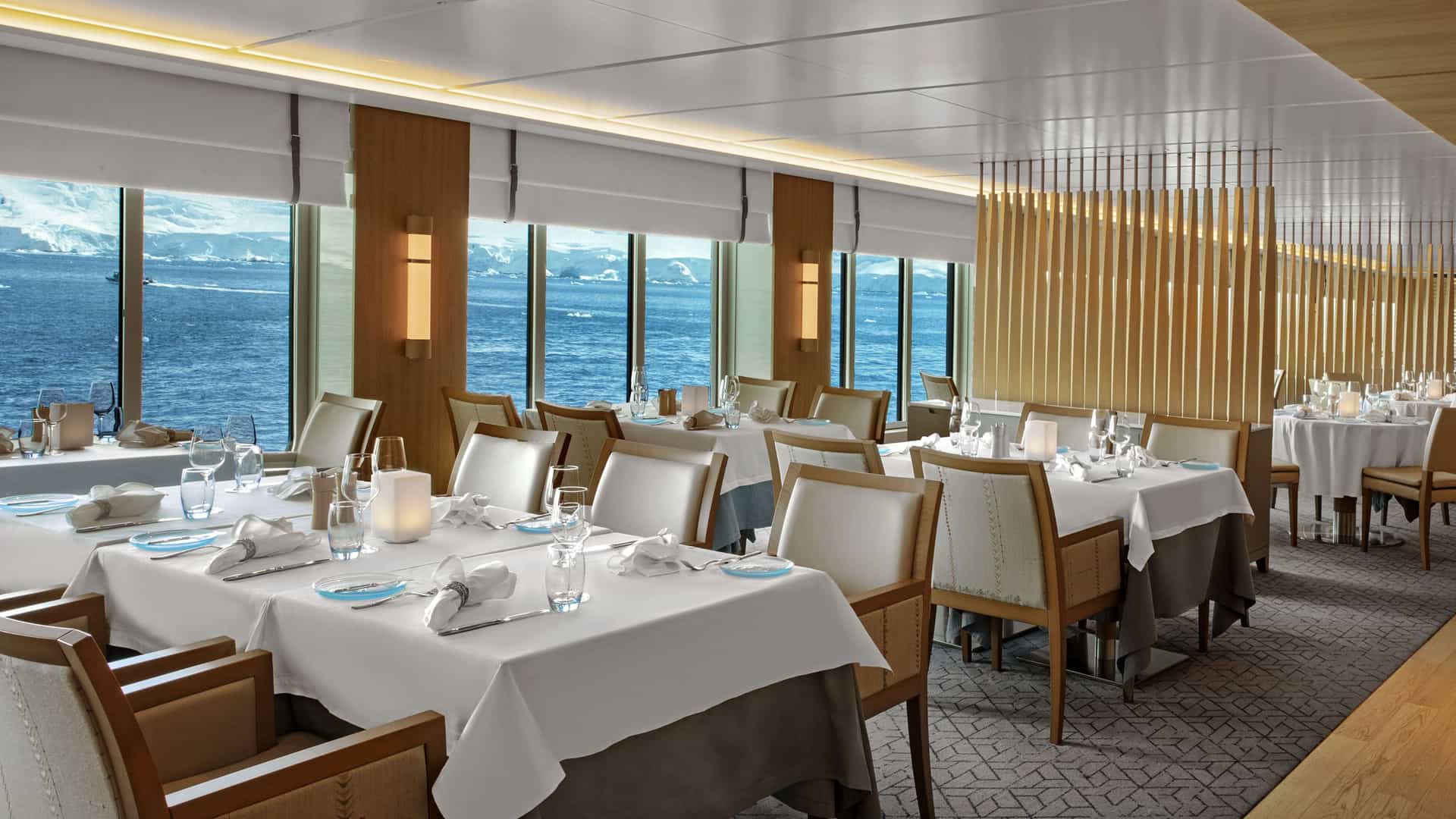
Meals on Viking Octantis and Viking Polaris lean into the destination as much as any lecture or landing does. From formal to casual, every venue carries that same idea through:
- The Restaurant: Menus that shift with the destination, so dinner in the Arctic doesn't taste like dinner in the Great Lakes.
- Manfredi's Italian Restaurant: An Italian trattoria's warmth, tucked inside a ship built for ice, plus a private dining room for a quieter night.
- World Café: Live cooking, an open kitchen and the easy pace of a casual meal between excursions.
- Mamsen's: Named for "Mamsen," the Hagen family matriarch, still serving her original waffle recipe alongside open-faced sandwiches and split pea soup.
- Bakery & 24-Hour Room Service: Fresh bread any hour, or dinner delivered on your own schedule.
Even after a full day of ice and wildlife, dinner still feels like part of the journey, not a break from it.
Onboard Spaces Worth Knowing
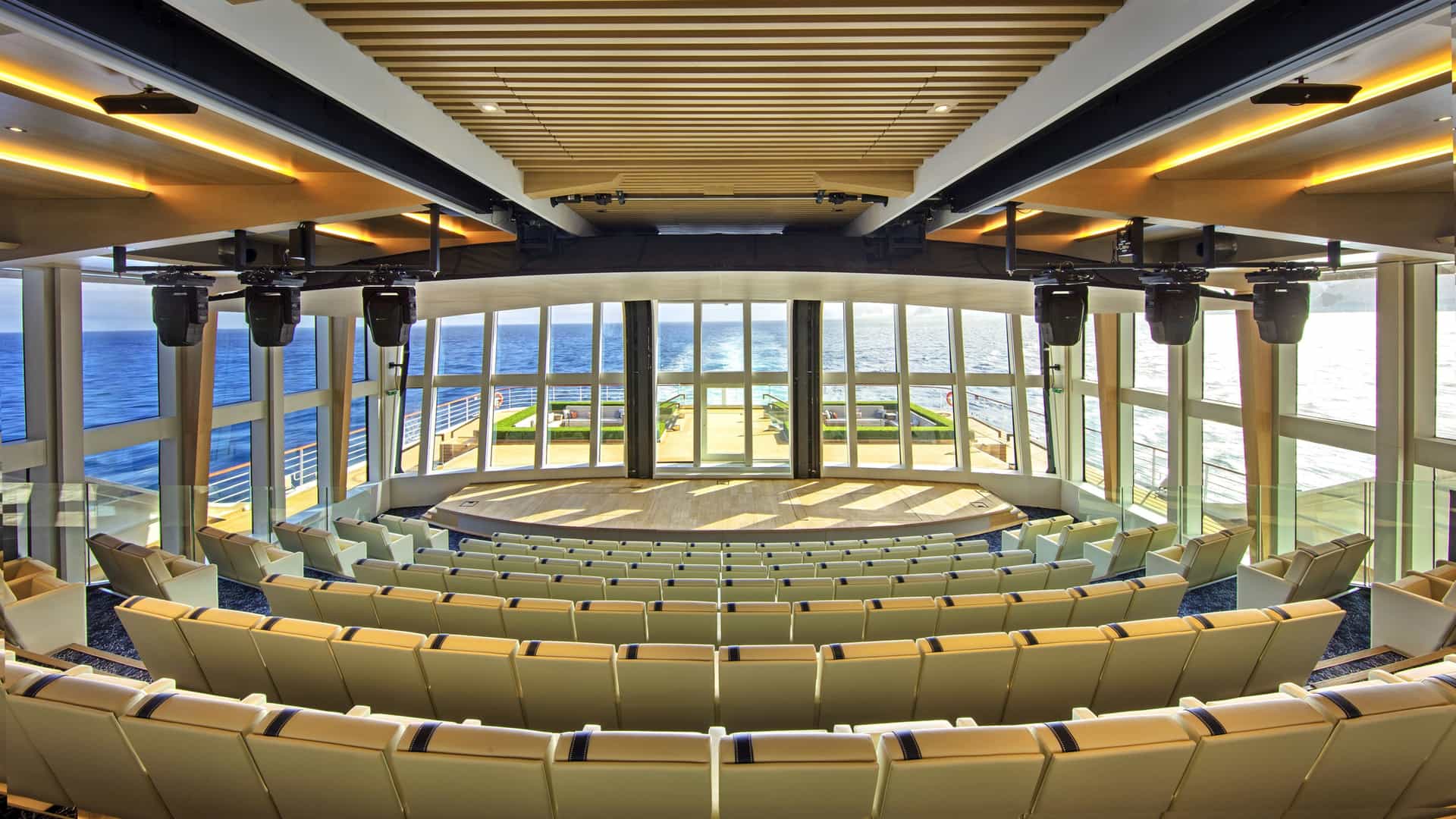
- The Aula: A panoramic auditorium modeled on the University of Oslo's ceremonial hall, the same room once used for the Nobel Peace Prize ceremony. A retractable 4K laser-projected screen gives way to floor-to-ceiling windows and 270-degree views.
- Expedition Central: The hub where the expedition team works one-on-one with guests to plan the day, using 3D-printed maps and a spatial data visualization chart table.
- Explorers' Lounge: A quiet spot to sample aquavit, a craft beer or Norwegian specialties while the scenery passes by.
- Finse Terrace: An outdoor space with couches and lava rock fire pits, named for Finse, the yellow Labrador belonging to Viking Vice President Karine Hagen and the star of her children's book series, The World of Finse.
- The LivNordic Spa: The same hot-cold Scandinavian bathing rituals found on Viking's ocean ships, a sauna, a snow grotto and a badestamp, the traditional Norwegian wood-sided hot tub.
- Aquavit Terrace: Extends that ritual outdoors at the ship's aft, with a tepidarium pool flanked by a caldarium on one side and a frigidarium on the other.
- The Onboard Art Collection: Curated with input from Viking's art advisor alongside Liv Arnesen, the ships' godmother and a globally recognized polar explorer with decades of firsthand experience across Antarctica, the Arctic and the Great Lakes.
Nordic Balcony Staterooms: A View Built Into Every Category
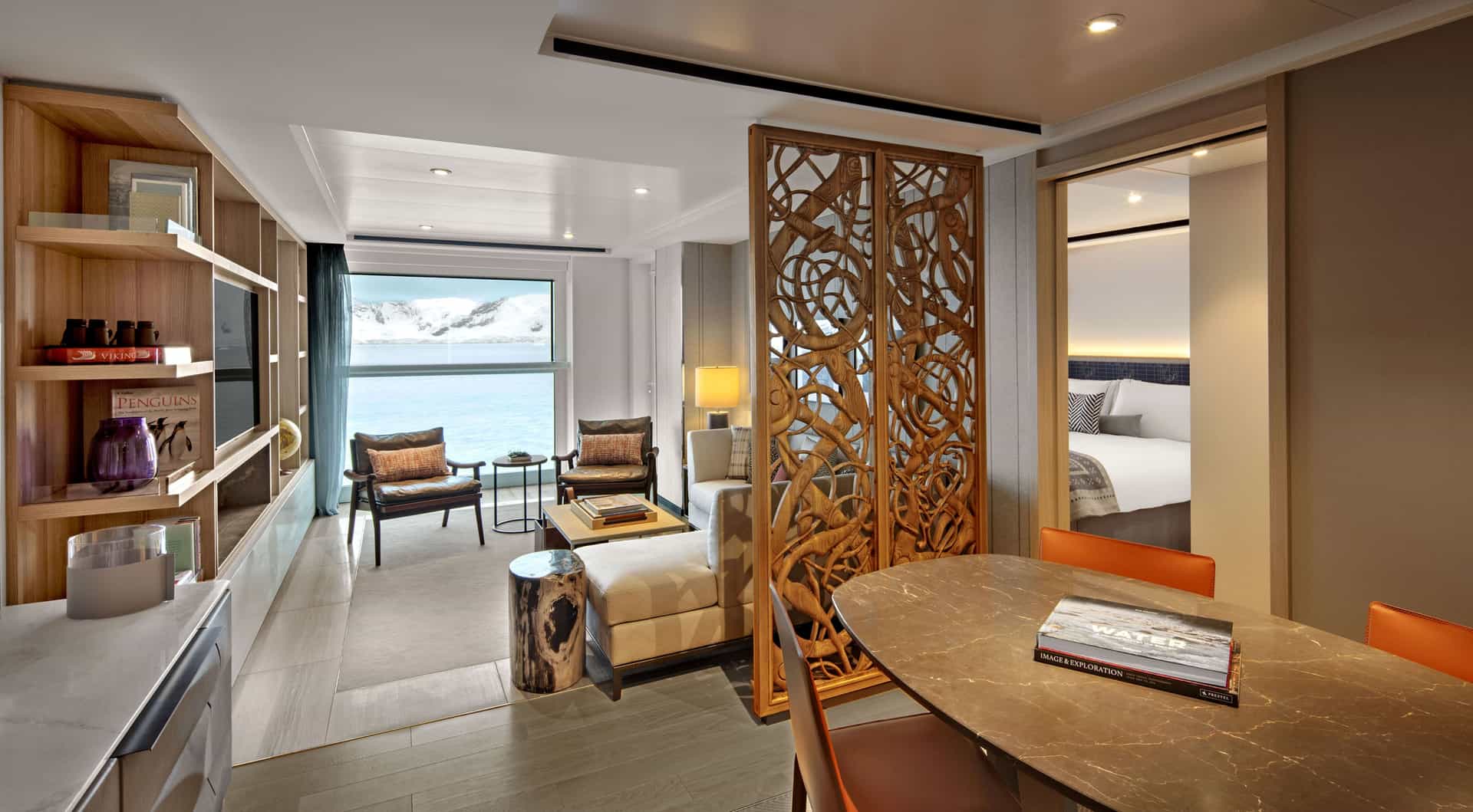
Every stateroom on Viking Octantis and Viking Polaris includes a private Nordic Balcony, floor-to-ceiling glass at the ship's edge that lowers to create a sheltered, open-air viewing platform, complete with an elbow-level shelf built to steady binoculars or a camera.
Category | Size | Description |
|---|---|---|
Owner's Suite (OS) | 1,960 sq. ft. | Panoramic multi-room suite with a private Nordic Balcony, separate bedroom, living room & dining area that seats 6, plus a 722 sq. ft. private garden with its own badestamp |
Explorer Suite (ES) | 548 sq. ft. | Two-room suite with a private Nordic Balcony & veranda, living & dining area that seats 4, plus private access to the Explorer Suites Garden |
Nordic Junior Suite (NS) | 322 sq. ft. | Stateroom with a private Nordic Balcony and additional storage & seating; select rooms are wheelchair accessible |
Nordic Penthouse (NP) | 269 sq. ft. | Larger Stateroom with a private Nordic Balcony |
Deluxe Nordic Balcony (DN) | 215 sq. ft. | Prime location stateroom with a private Nordic Balcony |
Nordic Balcony (N) | 215 sq. ft. | Stateroom with a private Nordic Balcony |
All categories include a king-size Viking Explorer bed, in-room binoculars, and a floor-to-ceiling drying closet that circulates warm air overnight. Also note that the Explorer Suite carries the same name on both expedition and ocean fleets but not the same size.
The Cruise Web Advantage: With only 378 guests aboard each ship, popular stateroom categories on Antarctica and Arctic sailings can sell out well in advance. Our Cruise Experts are certified in Viking Cruises, can confirm real-time availability & exclusive offers you won't find booking direct, and are there for you from the first question to
For a full breakdown of what each stateroom category includes, read our guide: What's Included on Viking Expedition Cruises
Which Expedition Is Right for You?
Viking Octantis and Viking Polaris are sister ships in every way but one: where they take you. The route you're drawn to will likely decide which one you sail.
- Antarctica: Both ships sail to Antarctica, crossing the Drake Passage for landings among icebergs, penguin colonies and some of the most remote coastline on Earth.
- The Arctic: Viking Polaris extends north into the Arctic, sailing past fjords, glaciers and polar wildlife.
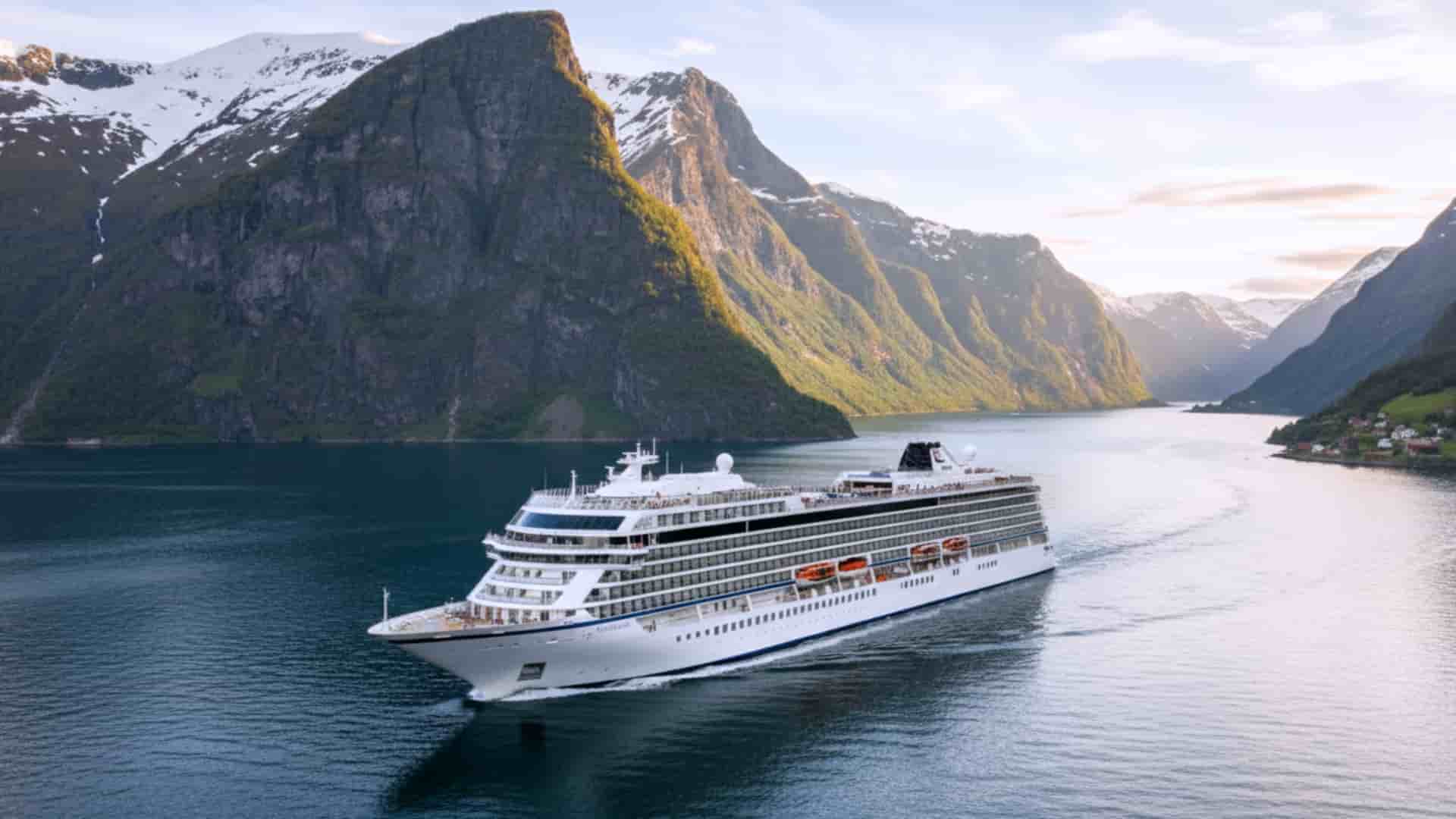
- The Great Lakes & North America's East Coast: Viking Octantis also proves expedition cruising doesn't require polar extremes. Part of her season stays in the Great Lakes, along North America's East Coast & Canada.
- Longitudinal World Voyages: For travelers who want it all, Viking offers extended Longitudinal World Voyages that combine multiple expedition regions into a single extraordinary journey, often paired with added onboard amenities and limited-time offers. These sailings are rare and don't stay open long once released.
Wherever you explore, one thing stays the same: you'll be sailing on one of the most purpose-built expedition ships in the world, and the next step is making sure you get there on the right sailing, in the right stateroom, at the right price.
Start Planning Your Viking Expedition Cruise
Viking Octantis and Viking Polaris were engineered for one purpose: taking curious travelers further than a typical cruise ship can go.
The catch is that a trip this far off the beaten path comes with real logistics like figuring out what's actually included versus an optional add-on like a submarine dive, arranging the medical evacuation insurance Viking recommends for polar sailings, and how to coordinate flights to a departure port that isn't exactly a short layover from home.
None of that has to be your problem.
Why plan with The Cruise Web
- We match the right ship and itinerary to your vision.
- We answer questions that go beyond what's on the website.
- We have access to exclusive deals and amenities.
- We advocate for you throughout the whole process and beyond.
Ready to start exploring? Our Cruise Experts can talk through your priorities, whether that's polar ice or closer-to-home discovery, and match you to the Viking ship built for it. Call 1-800-377-9383 or visit cruiseweb.com to start planning.
Browse Viking Expedition DealsNote: The contents of this article are accurate as of the publication date. Viking Cruises itineraries, inclusions, and prices are subject to change at any time.
Frequently Asked Questions (FAQs) About Viking Expedition Ships
Why book a Viking Expedition cruise through The Cruise Web instead of directly?
Booking through The Cruise Web costs nothing extra. There are no booking fees, and you may also gain access to exclusive perks and onboard credit not available when booking direct. You're matched with a dedicated cruise consultant who specializes in expedition and polar cruising, someone who can help you compare Viking Octantis and Viking Polaris itineraries, confirm stateroom availability before it sells out, and answer the kind of one-on-one questions Viking's own site isn't built to handle. That consultant stays with you from your first inquiry through the day you return home, and beyond. The Cruise Web has been booking cruises since 1994 and is affiliated with CLIA, ASTA, and IATAN.
How many guests do Viking Expedition ships carry?
Both Viking Octantis and Viking Polaris carry 378 guests, cared for by a crew of about 260.
What is Polar Class 6?
Polar Class 6 is a shipbuilding classification for vessels designed to operate in polar waters, including first-year ice conditions. It reflects the ice-strengthening and safety engineering built into Viking Octantis and Viking Polaris.
What's included on a Viking Expedition cruise?
As with Viking's river and ocean fleets, your fare includes all dining, one excursion or landing per port, complimentary Wi-Fi, and access to the LivNordic Spa. For a full breakdown, see our guide: What's Included on Viking Expedition Cruises.
What is The Hangar?
The Hangar is an industry-first, enclosed in-ship marina that lets guests board expedition craft, including Zodiacs, kayaks and Special Operations Boats, from a sheltered, stable platform before heading out to explore.
Do Viking Expedition ships have submarines?
Yes. Both ships carry two six-guest submarines with nearly 270-degree spherical windows for undersea exploration.
What is the Nordic Balcony?
Every stateroom on both ships includes a Nordic Balcony: floor-to-ceiling glass at the ship's edge that lowers to create a sheltered, open-air viewing platform, with a shelf built in at elbow height to steady binoculars or a camera.
Where do Viking Octantis and Viking Polaris sail?
Both ships sail to Antarctica. Viking Polaris also sails the Arctic, while Viking Octantis sails the Great Lakes and North America's East Coast.
Is there a research program onboard?
Yes. The Science Lab, developed with the University of Cambridge's Scott Polar Research Institute and Akvaplan-niva, and in partnership with the Cornell Lab of Ornithology, lets guests take part in real fieldwork alongside Viking's Resident Scientists.