Overview
Inishmore, Ireland Tours
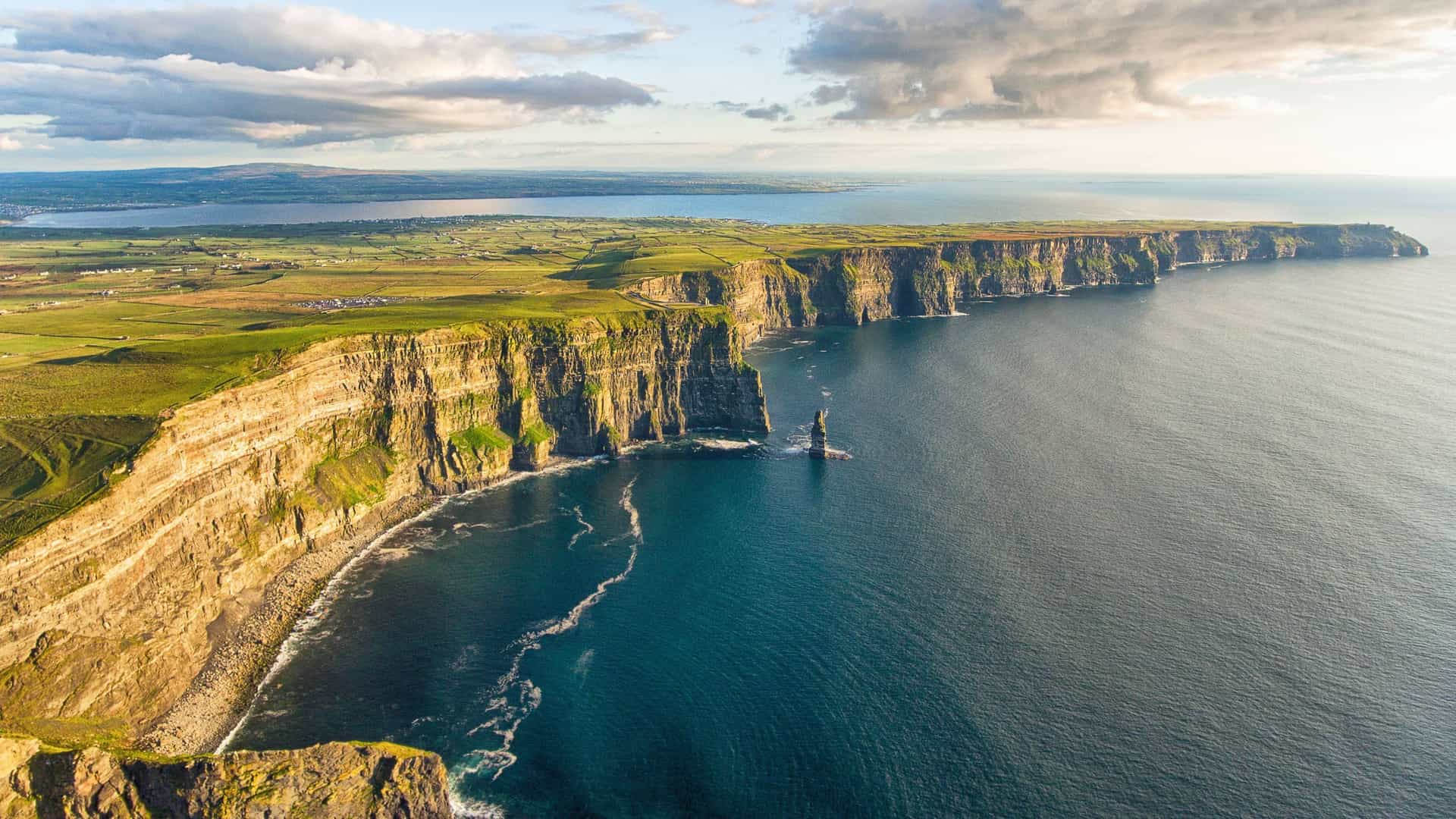
Inishmore, the largest of the Aran Islands, lies off County Galway where cracked limestone pavement meets the full force of the Atlantic. Some 800 Irish-speaking islanders keep a landscape of dry-stone walls, early-Christian churches, and Bronze-Age forts. Ferries from Rossaveal and Doolin land at Kilronan, and from there bicycles, pony traps, and minibuses fan out across the island. Movement is elemental: wind off the ocean, rain in bursts, and long light over stone. The terrain is bare and beautiful, the heritage profound. Every field is walled by hand, every horizon edged with sea.
What defines Inishmore is its balance of stark beauty and deep time. You move from the vertigo of Dún Aonghasa's cliff edge to the shelter of Kilmurvey's white sand, from the geometry of ancient stone forts to the wild rectangle of the Worm Hole, and from Irish-language greetings to the silence of the limestone terraces. The scale is walkable, the weather theatrical, and the past always present. It's a destination where three thousand years of island life are written in stone.
Top Things to Do When Visiting Inishmore, Ireland
Dún Aonghasa
A Bronze-Age stone fort on a 100-meter cliff edge, ringed by three massive dry-stone walls.
Tip: Walk to the cliff edge only in calm, dry conditions.
Poll na bPeist (The Worm Hole)
A perfect rectangular sea pool carved into the limestone shelf below the fort.
Tip: Combine with Dún Aonghasa—it's a short walk from the fort trail.
Na Seacht Teampaill (Seven Churches)
Early-Christian monastic ruins scattered across a quiet western headland.
Tip: Morning visits avoid the midday tour groups.
Kilmurvey Beach
A sheltered crescent of white sand with the island's calmest swimming water.
Tip: The water is bracing—bring a towel and warm layers.
Dún Dúchathair
A dramatic clifftop fort far less visited than Dún Aonghasa, with sweeping ocean views.
Tip: The extra hike keeps the crowds away.
Inishmore Seal Colony
Grey seals hauled out on the rocks along the island's wilder shores.
Tip: Scan the shoreline with binoculars from the coastal road.